
Sand Shark AH-1F Cobra V2
Rebirth
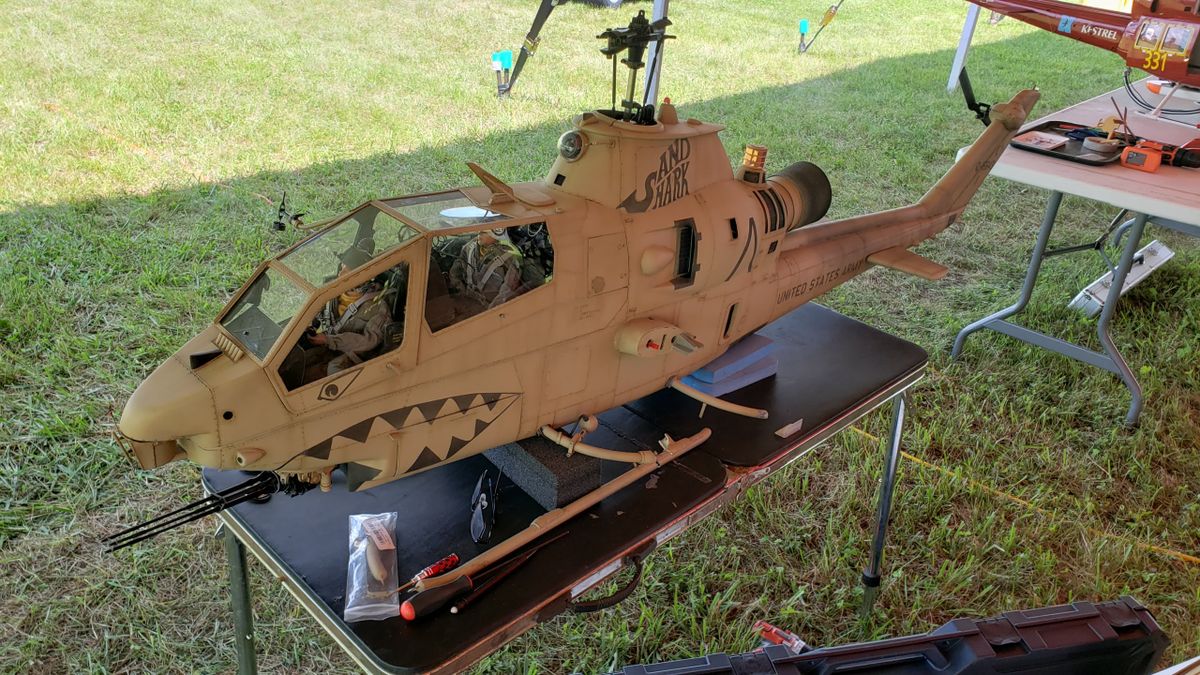
Since the 20' hard autorotation suffered by the Len Mount/Vario Sand Shark Cobra at the 2020 IRCHA (seized motor), the heli had been gathering dust while my other interests took me elsewhere. I decided to pick up where I left off and replace the power train with a more powerful KDE700XF-445. The previous 810mm blades were too short for a heli this size and weight, requiring close to 9 degrees of pitch to hover. All the animatronics in the nose section didn't help with the weight either. FYI, this heli features 16 servos within. As a result, the blades are replaced with the longer 920mm Helitec. A new power plant and larger blade disc need a new gear ratio, requiring several tries with spur gears of various teeth-count before I found the optimal combo (12T). Here are the new stats:
Flight weight 29 lbs, Headspeed 1050 rpm, hovering at 7 degrees, 12S 6500mAh, Current 41A, Motor temp 175F.
Here's the maiden tuning flight. Let's test out the new native video streaming feature of this site:) Well, it turned out my 2:50 minute video didn't go through because there's a 400MB size limit here. I had to re-encode my video to low bit rate and try again. Let's see...
Feedback for Mike Kranitz:
My heli (1/6 Len Mount AH-1F Cobra) doesn't fit into any of your predefined filter categories, hence cannot be tagged for searchability. I suggest you provide a free form tagging box for models that aren't predefined.
More scale details- Skid Connectors
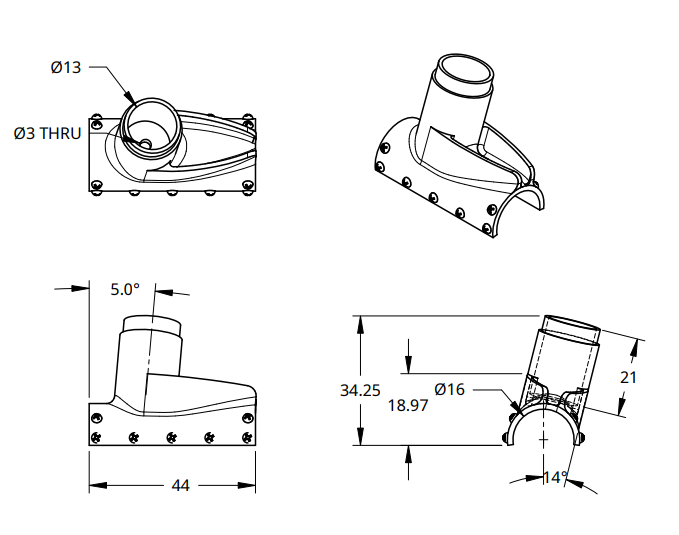
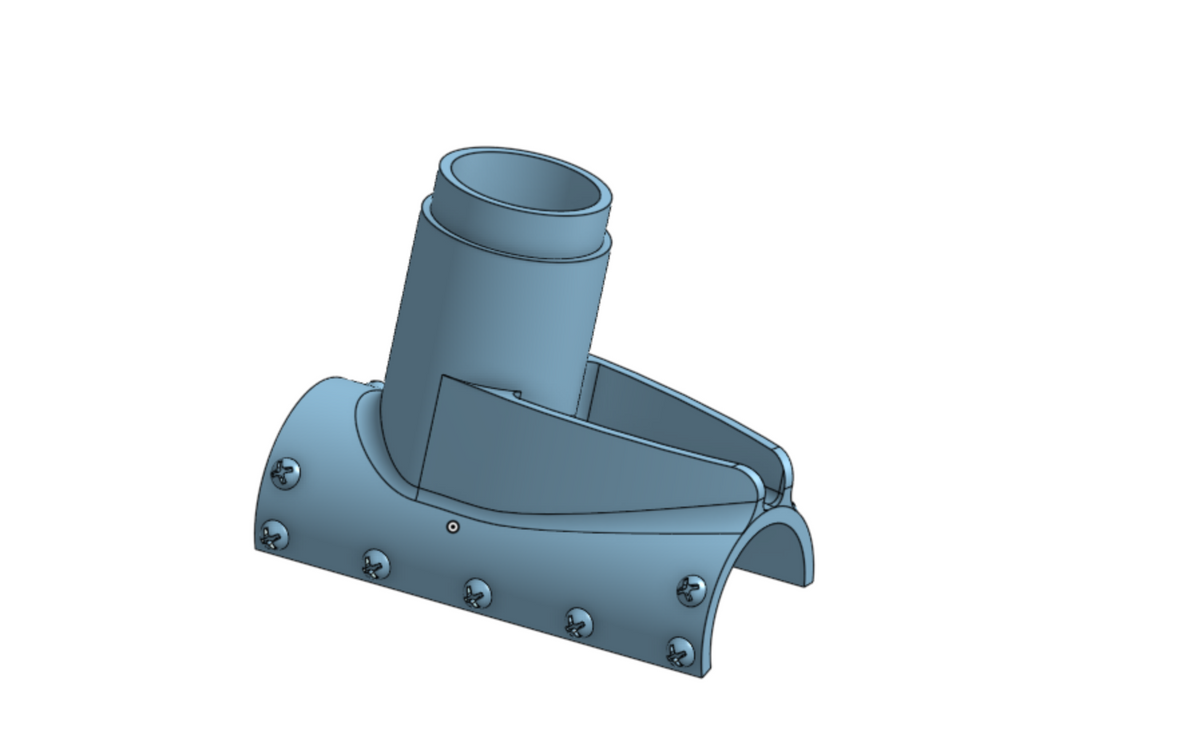
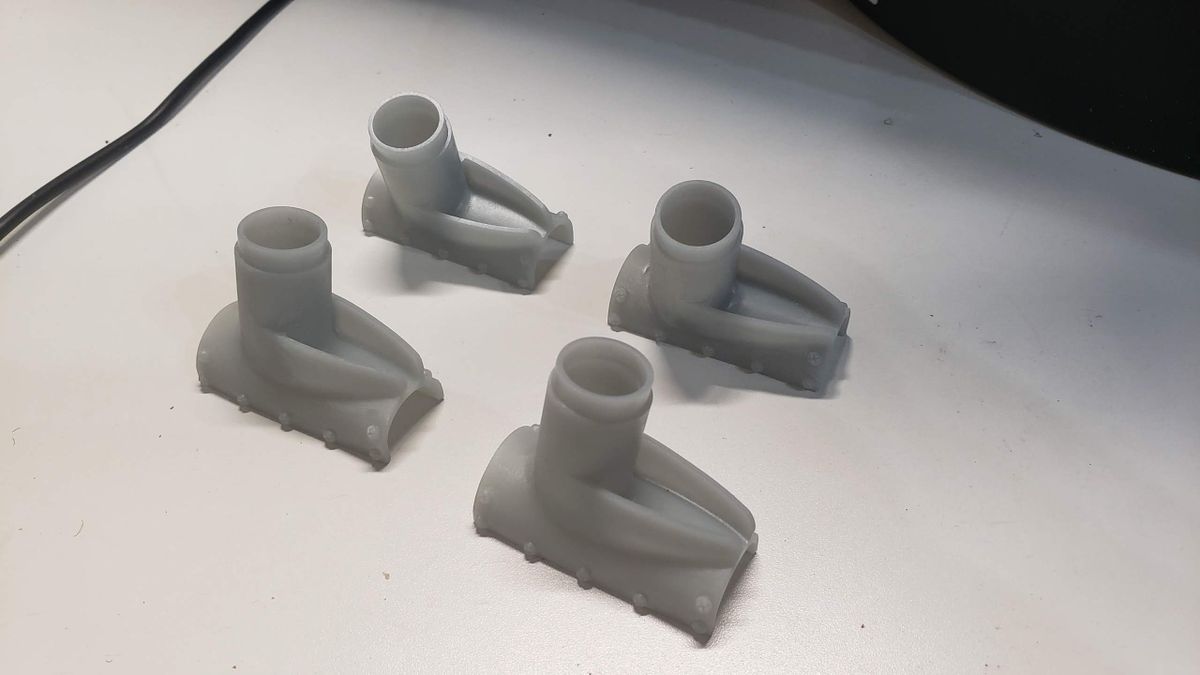
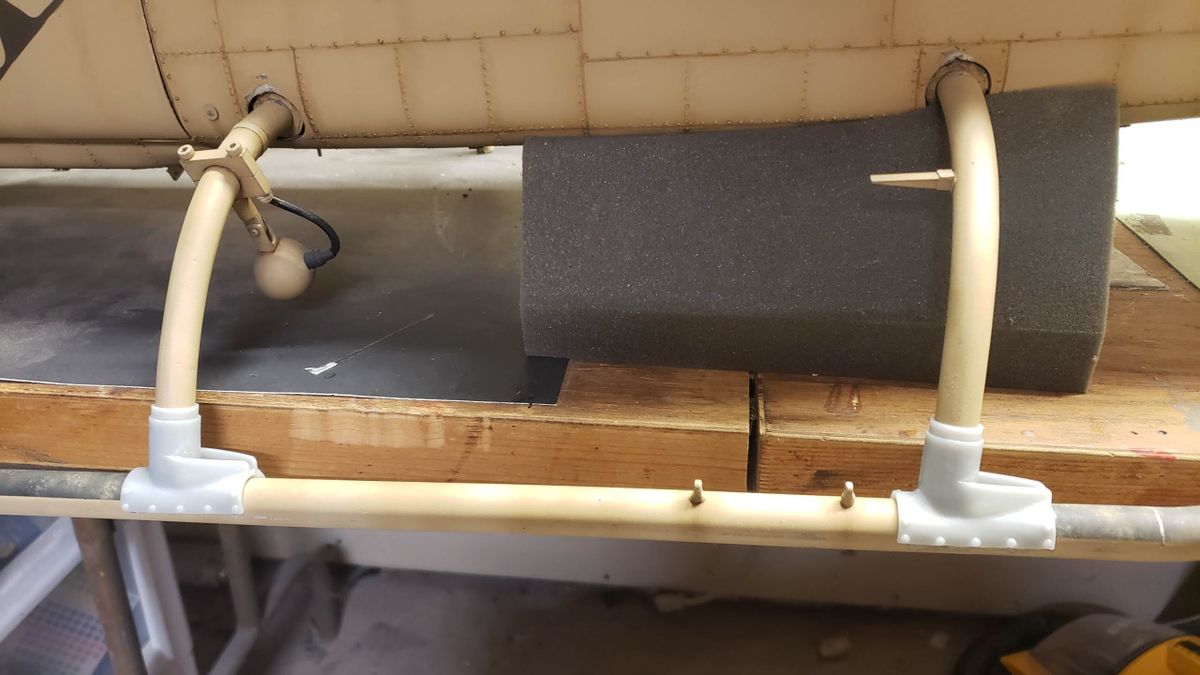
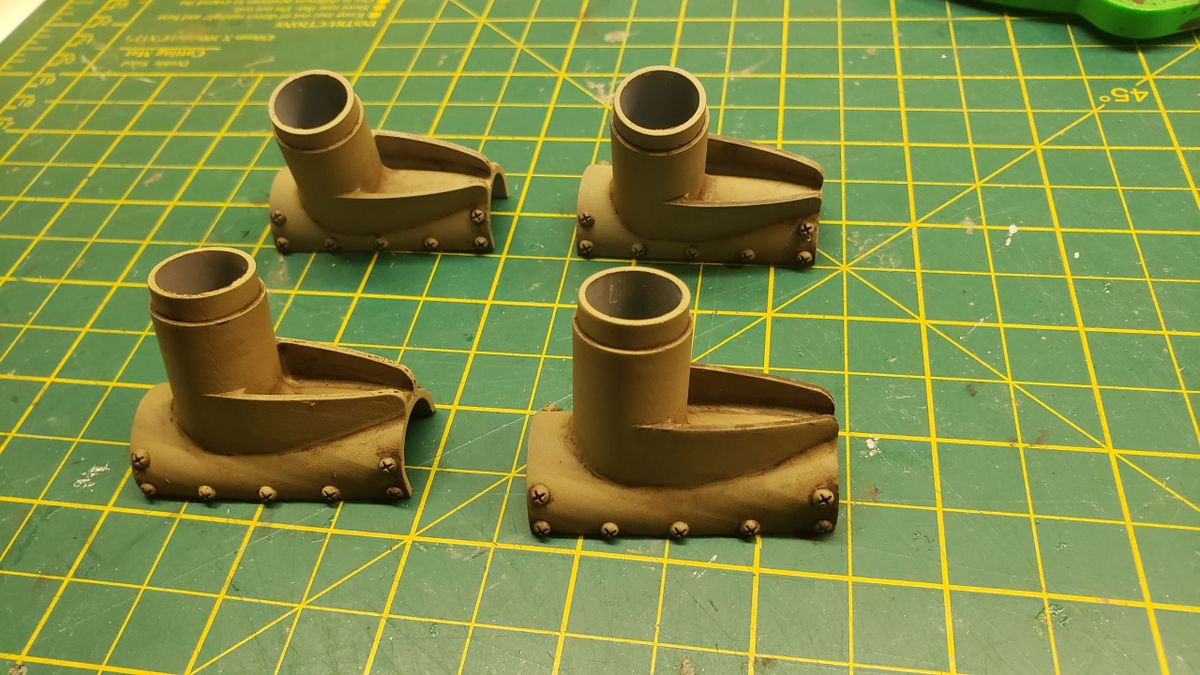
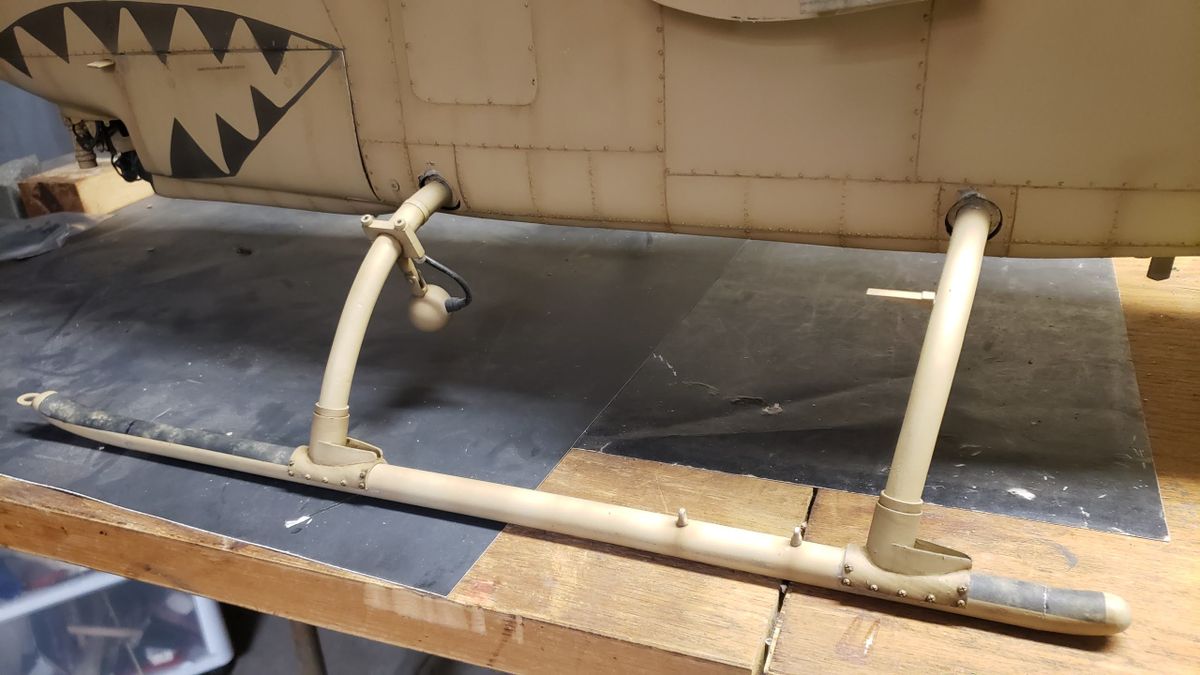
I had no 3D modeling nor printing skills when I first built this helo 3 years ago. Hence 95% of the details were built by hand. Many details were left unbuilt because they were either impractical or impossible to be hand built. I have since learnt to 3D model and print with resin, it has opened up a whole new realm of possibilities and allow me to pursue these unfinished businesses. I chose to start with the skid connectors.
The original connectors supplied by Len Mount were resin-cast and non-scale. They were all broken from the hard autorotation mentioned earlier. Despite the hard landing, the fuselage miraculously survived and was 99% unscathed. I believe this is due to the connectors breaking, allowing the struts to rotate backwards and dissipating most of the crash energy. A rigid landing gear system would have torn up the fuselage and its internal bulkheads. Therefore I wanted to retain the breakaway property of the connectors as well as making them accurately scaled this time. A resin mixture that produces a hard but non-brittle property is required for this print.
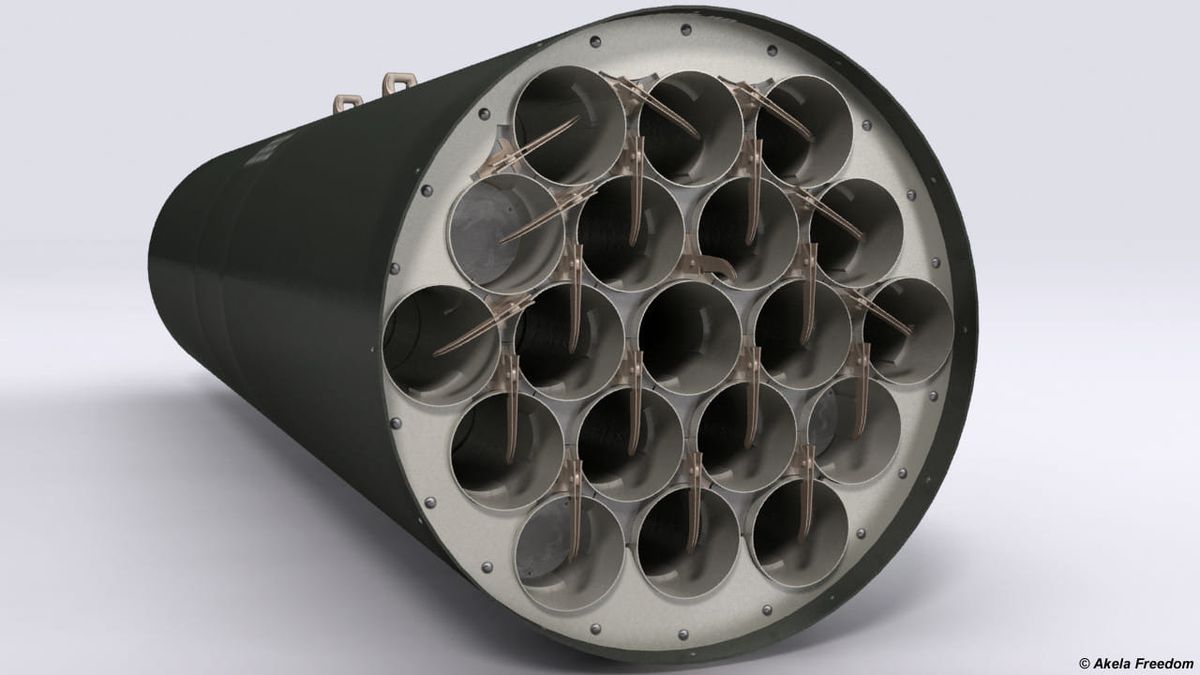
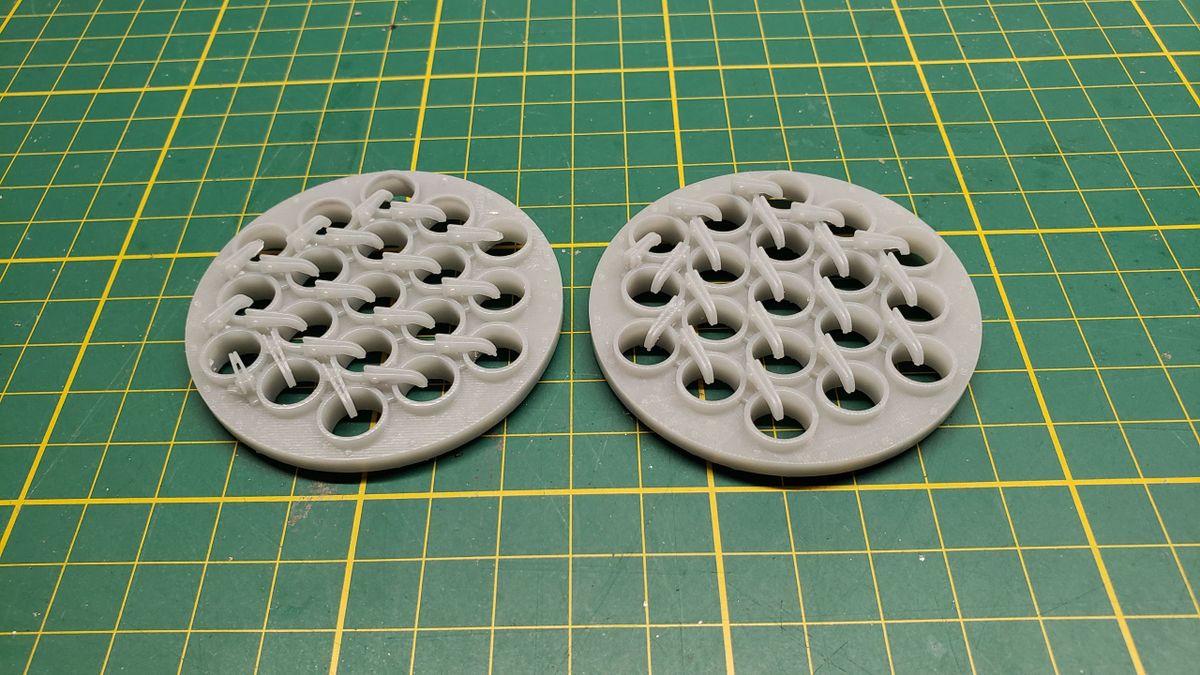
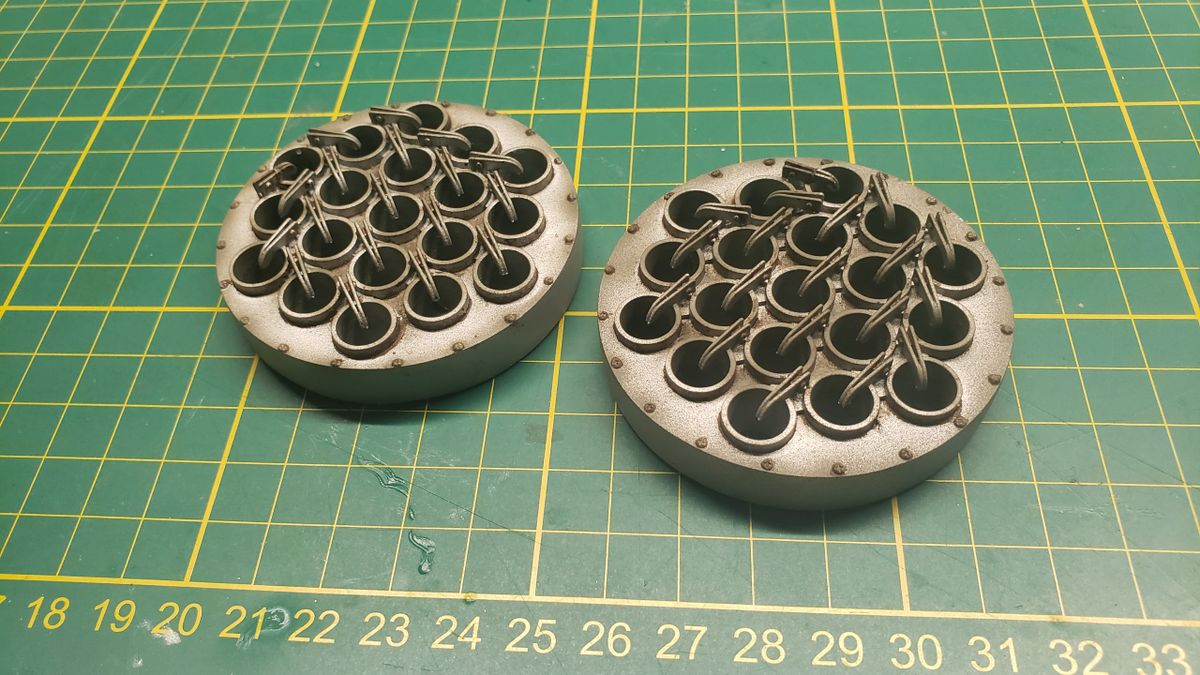
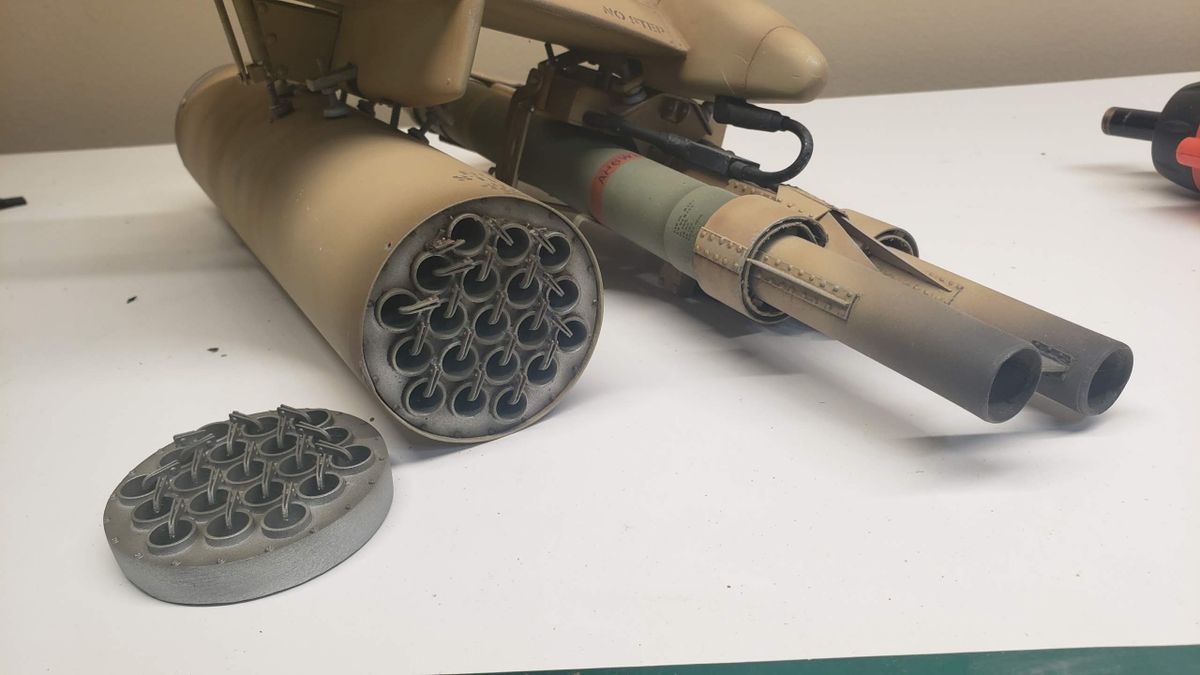
M261 Rocket Tube Igniters
These are metal tabs that lock in the rockets and send electrical current to ignite their launch during flight. They are 19 tiny igniters per launch tube (38 total) and they're almost impossible to build by hand accurately. This is why nobody builds them and you never see them in military scale models, yet they add so much to the visual complexity and scale enhancement of the model. So I decided to give it a try and they turned out surprisingly well.
Turntable
Let's take a break from building and enjoy the Cobra spinning on a turntable!
Mooring Rings and Breakaway Accessories
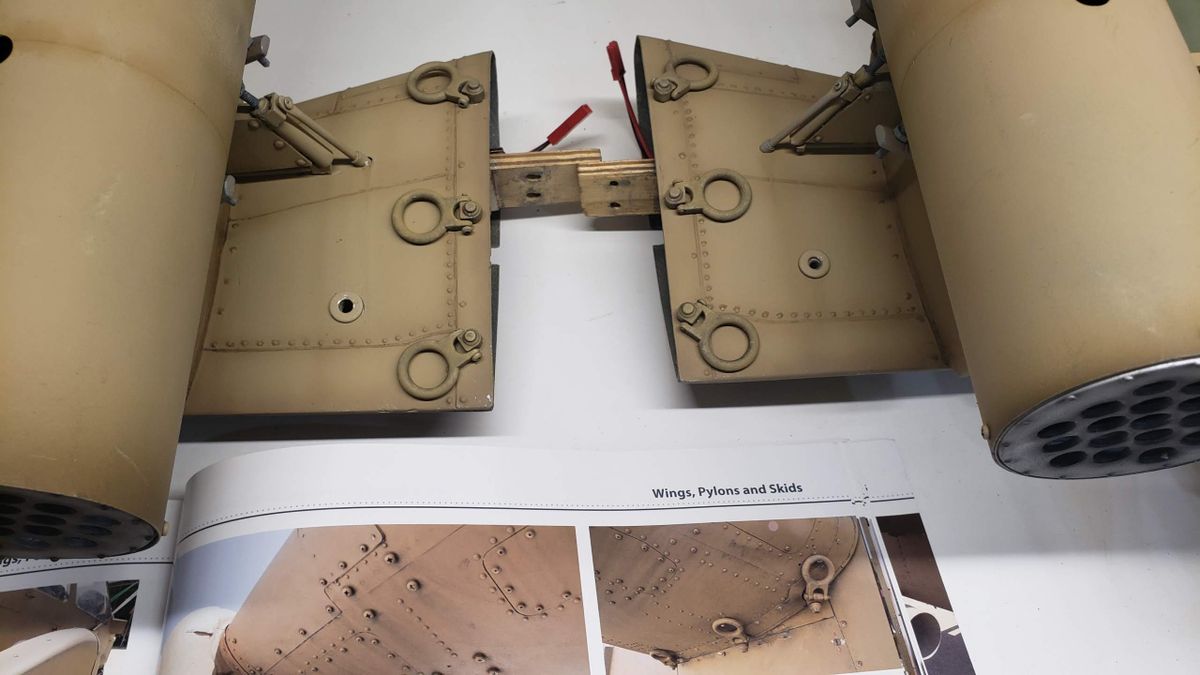
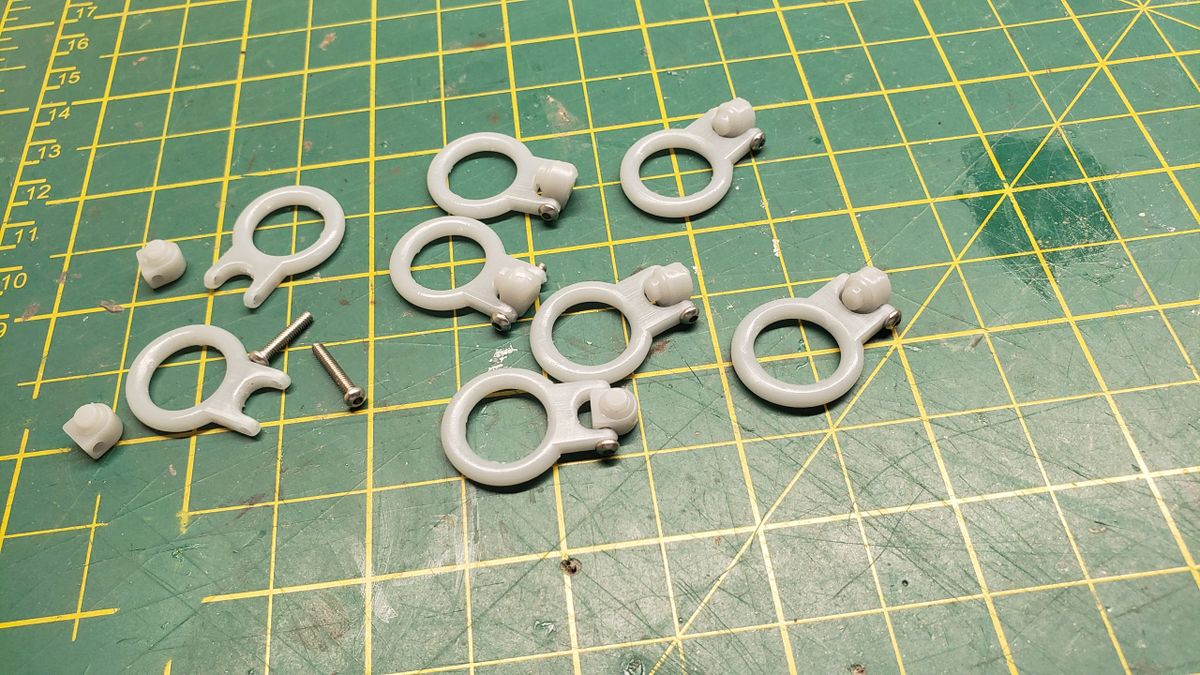
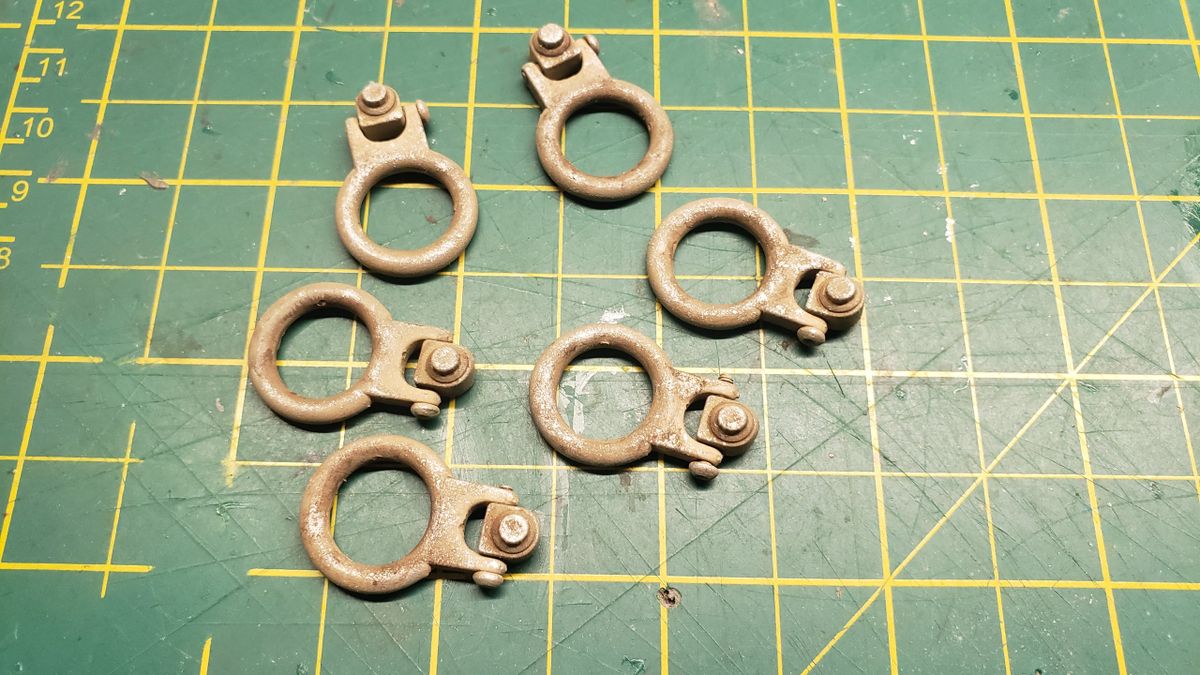
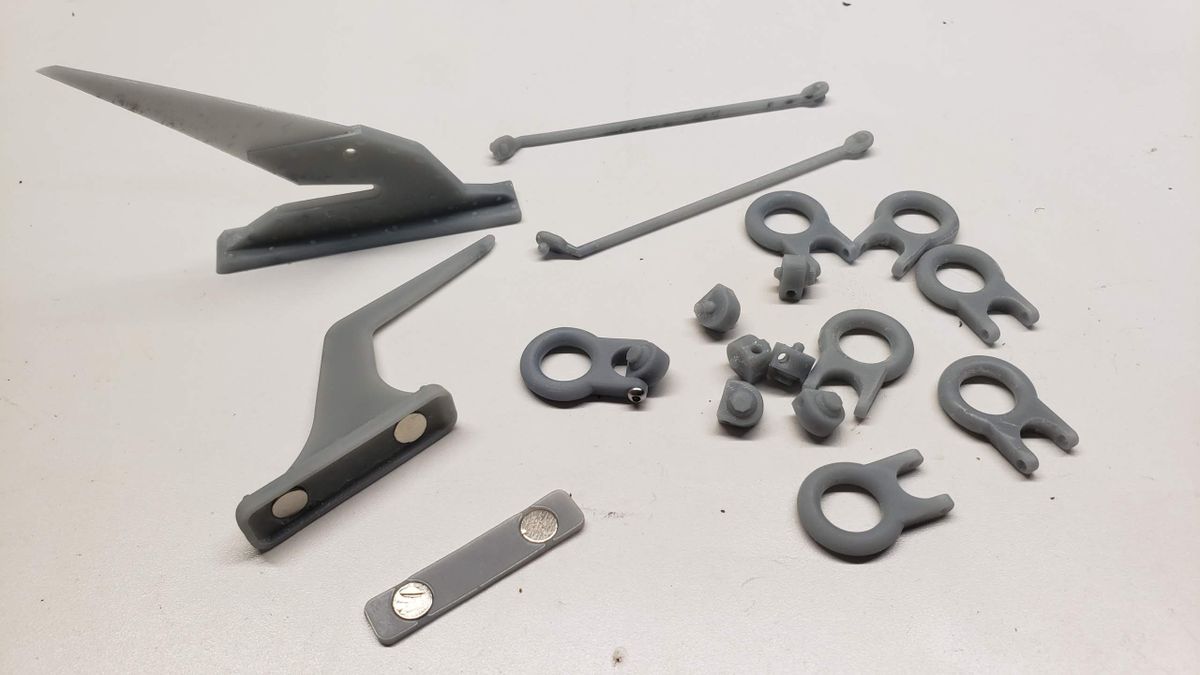
3 mooring rings are located under each wing, they're used for tying down the helo during transportation. One of the benefits of resin vs. FDM printing is multi-part print time. In resin printing, it takes the same amount of time to print 1 or 10 parts, as long as they all fit in the build plate. This would have taken 10x time to print in FDM.
One problem with maneuvering and transporting a large and heavy model is accidental handling damage. Intricate scale details like antennas and wire cutters are especially susceptible to hanger rash. So I decided to make the most vulnerable pieces fasten-able with magnets and can easily break away without damaging the substrate.
Sound
Many are curious about my sound system so here's the story.
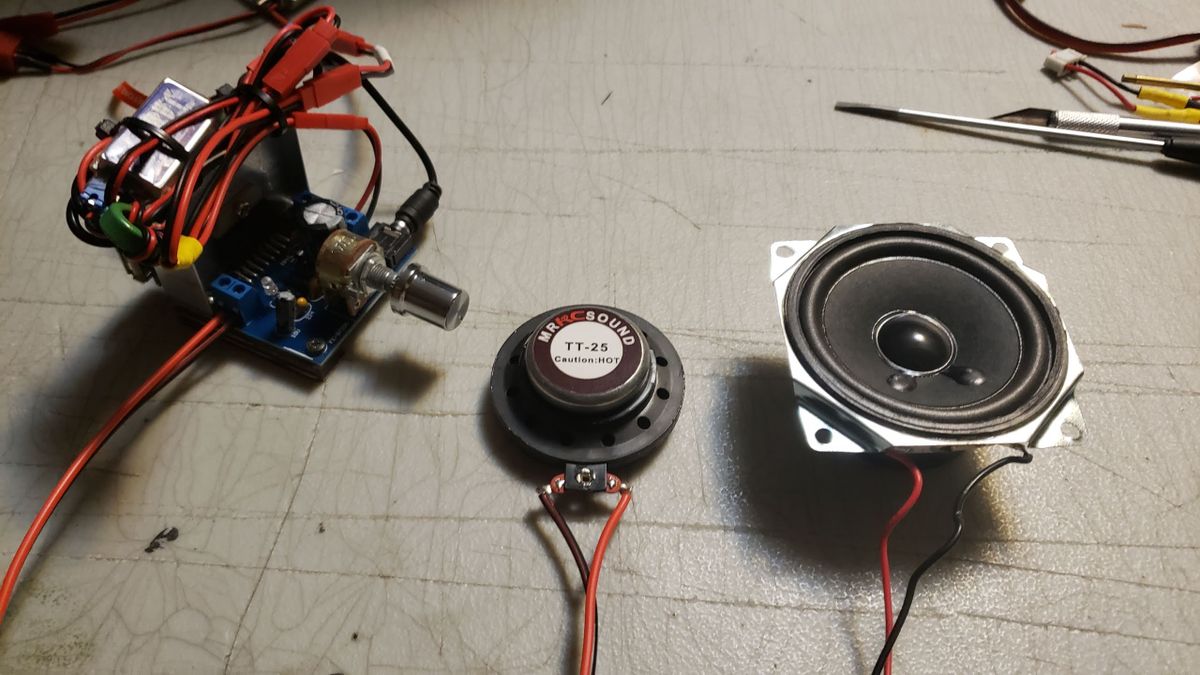
While there are several commercial sound systems available for purchase, I was never fully satisfied with what they offer. They mostly focus on the engine sound- turbine startup, in-flight and shutdown, IMO neglecting to accentuate the most important element, the signature air thumping sound of a helo in flight. Observe any real heli fly, almost no turbine whine is heard. The most dominant sound comes from the blade slap and the whistling caused by blade tip vortex. This is especially pronounced in two-bladed helis like the Cobra and Hueys.
So I decided to build my own system, consisting of a digital MP3 board, remote track control, an amplifier and transducer speaker. It has a volume control knob (located behind a belly hatch) that allows for static demonstration without the sound being so loud that it drowns out conversations around it. An actual digital recording of a Cobra flight was used. Turbine spool up/down time was significantly shortened for I have no patient to wait for them. Most importantly, the blade slap was edited and digitally enhanced to cut through the model's gear noises.
A sound mixer board is used to integrate sounds in real time, sound effect sources from the weapon system and an external soldier's M16 rifle. That will be told in a future story. This mixer board also provides the flexibility to adjust and balance the sound volume from each source.
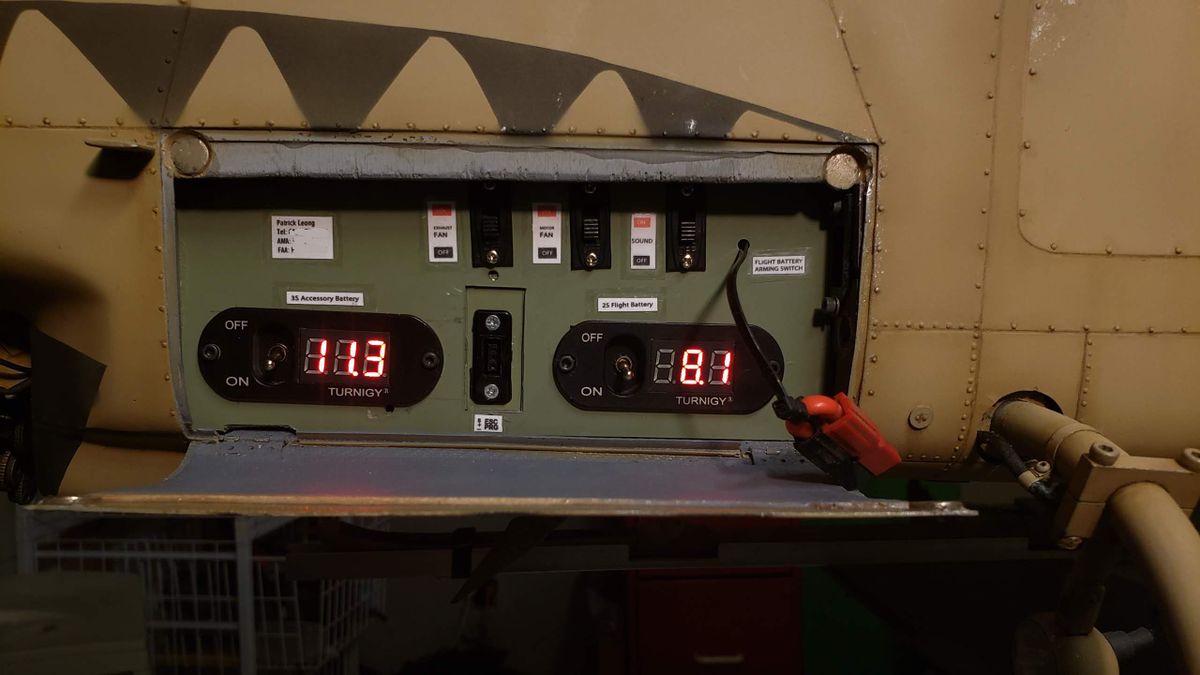
An external switch turns on the 12V amplifier, a Tx switch is used to start the sound, another is used to manually switch from spool-up/flight to shutdown. In fact, I'm still editing it in an attempt to find the best version.
Since the page doesn't allow mixing image with video, I'll post the sound integration test video in the next chapter.
Sound Integration Test
Notice the shortened spool-up period.
Sync Elevator
While I've made the Sync Elevator movable to replicate the real heli, I had no intention to actuate it during flight; I didn't want to risk messing with the FBL controller not knowing what it will do if flight attitude is externally affected. It is currently used for cosmetic display only.
This is how it should function in a real Cobra according to a retired Cobra pilot friend: "It is used during flight. Simply mechanically based on cyclic longitudinal position, if my memory serves me right. More forward stick = faster speed= more forward tilt of rotor disk = more nose pitch down. This is all generally bad for a few reasons. Worst is it causes more drag due to the entire fuselage being tilted down. This is Counteracted by stab tilting trailing edge up to help pitch the nose up and keep a more level fuselage attitude. This helps to reduce drag overall by making the entire fuselage more level and in-line with the airstream. All of this works in reverse during a deceleration as well."
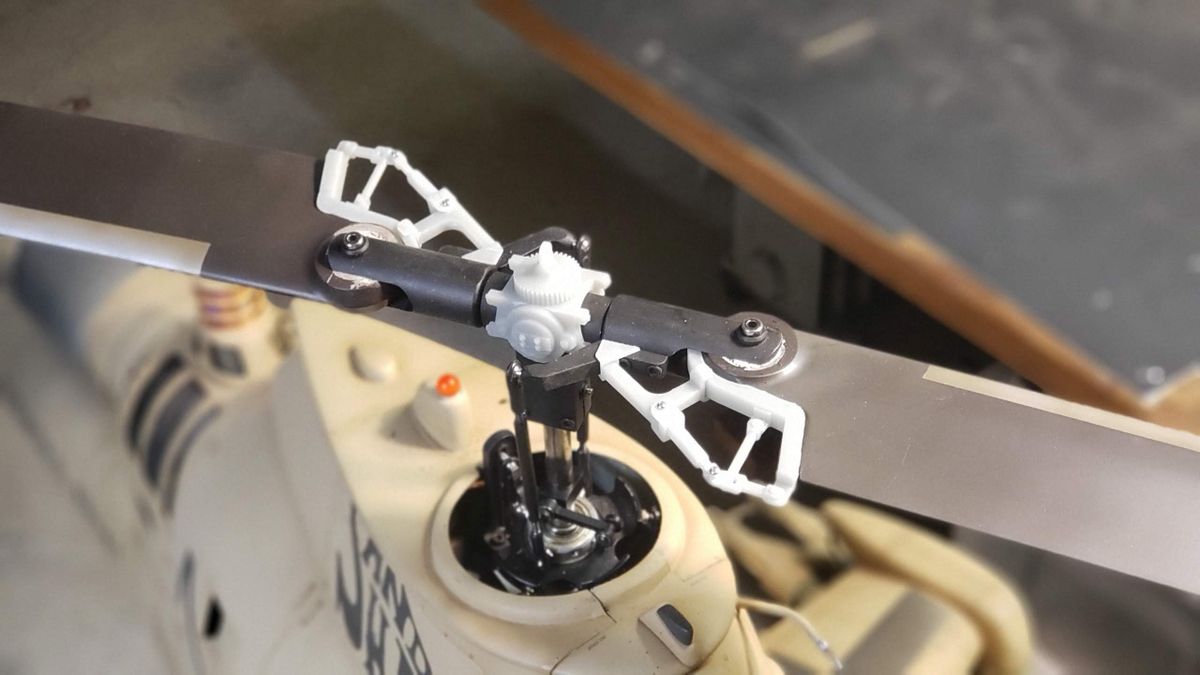
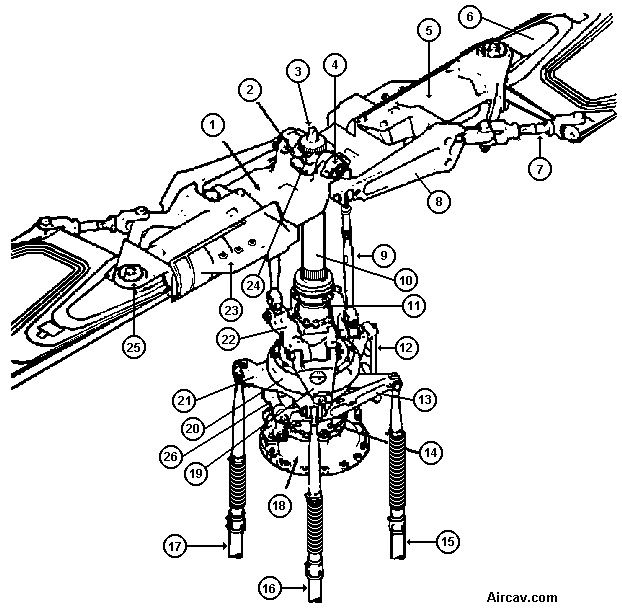
Semi Scale Rotor Head
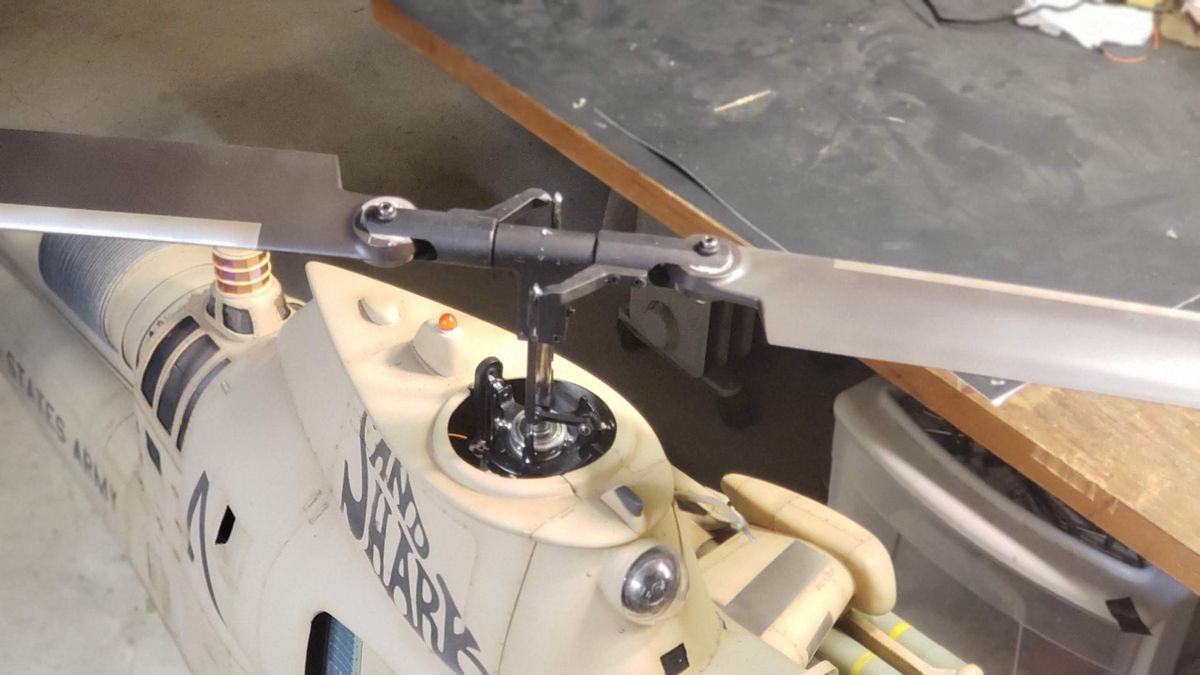
One of the dead giveaways of a scale RC model is the rotor head, which is usually non-scale. Most of us who do not possess the CNC skills to construct a custom scale metal head have to live with commercial heads available in the RC marketplace. Or do we?
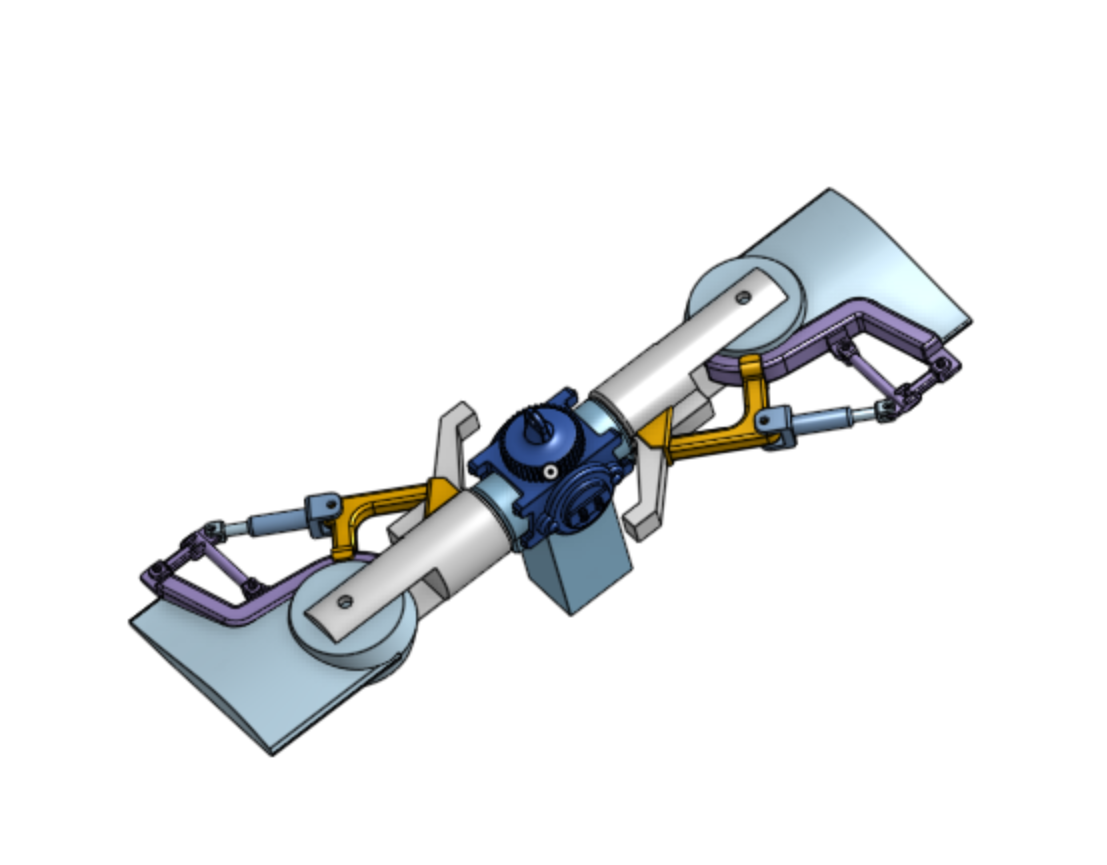
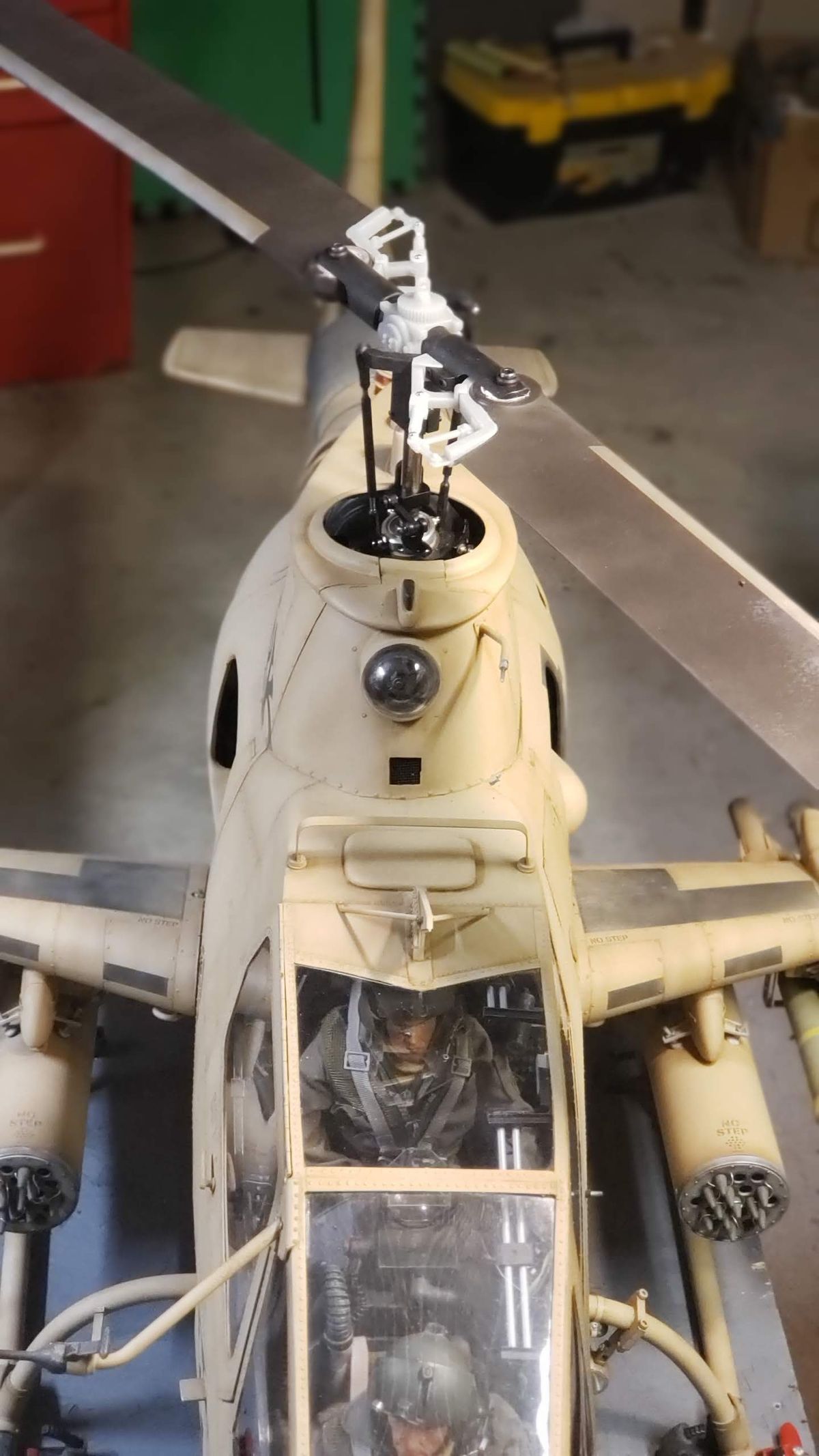
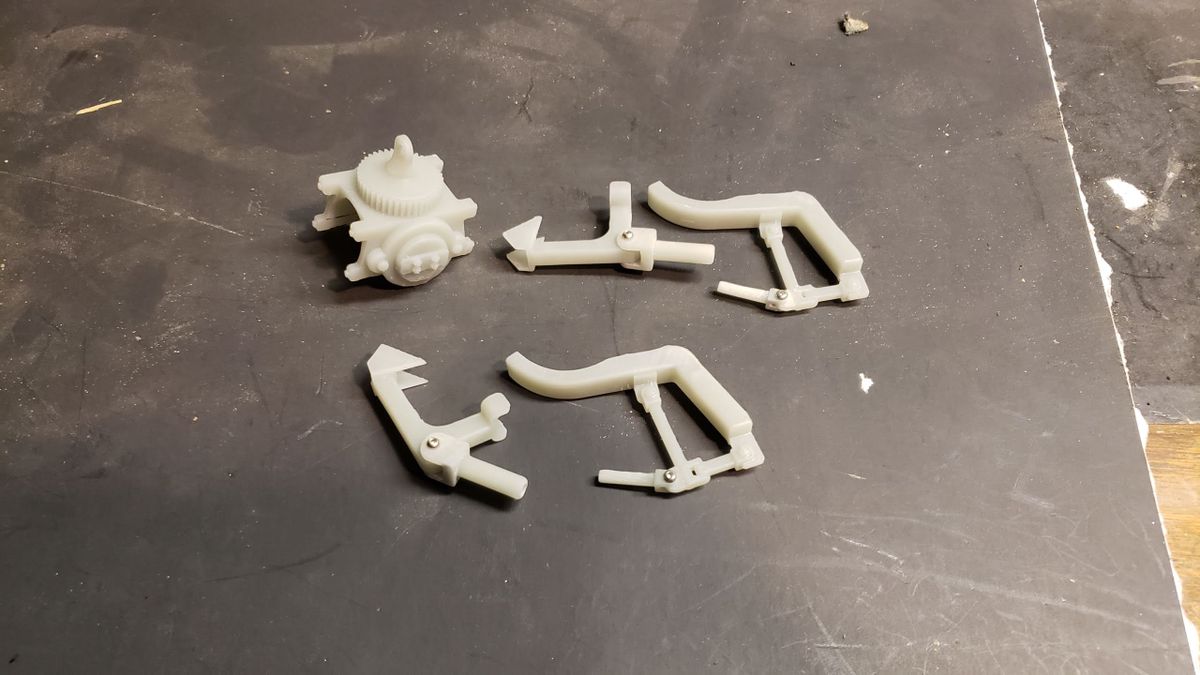
Here's my attempt to dress up a simple rotor head with cosmetic elements in an effort to bump up its scale fidelity. The Cobra has a very unique teetering head with 3 prominent features: lag braces, elastomeric bearings and a large mast nut at the top. While it's impossible to faithfully reproduce the entire scale head, adding just these 3 features should vastly improve the scale look.
The main challenge is to prevent the scale elements from impeding the lead/lag motion of the model's main blade. My solution is to create two main components: one is attached to the grip and the other to the blade. They are mated through the lag brace which behaves like a telescope, allowing for about 30 degrees of rotational movement.
This added visual complexity should greatly improve the scale factor, especially when seen from flying distances.
Dogs of War II- Combined Arms
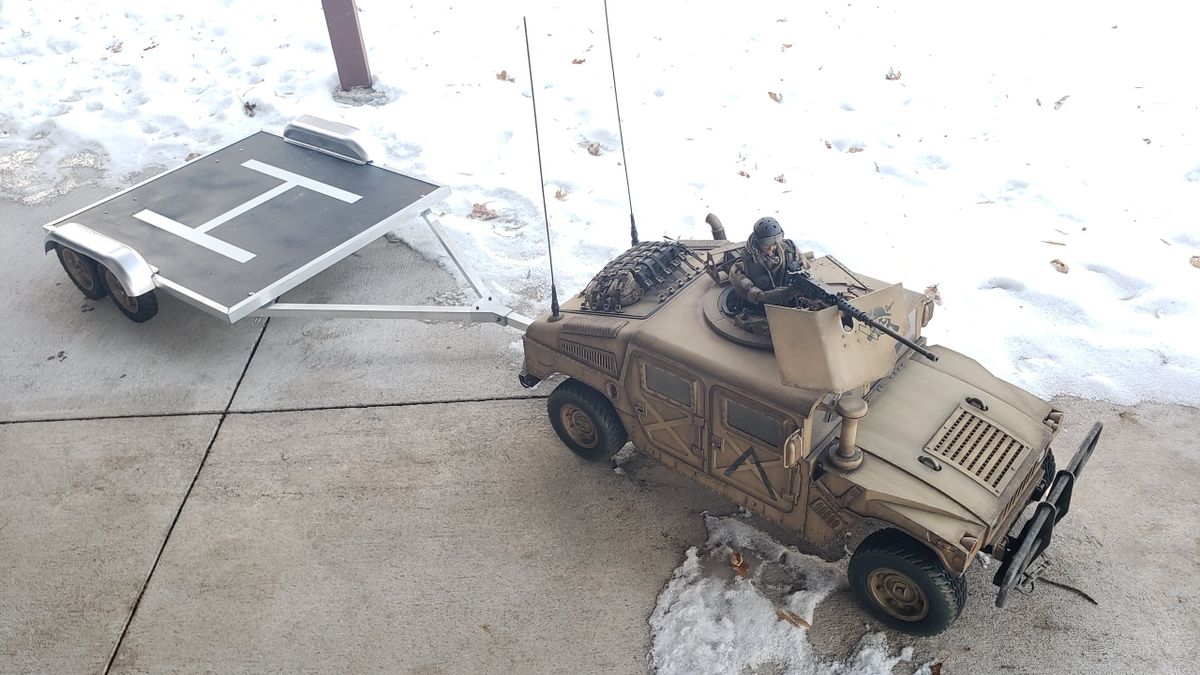
Even attack helicopters need ground protection. Having a little fun with the Cobra's companion Humvee.
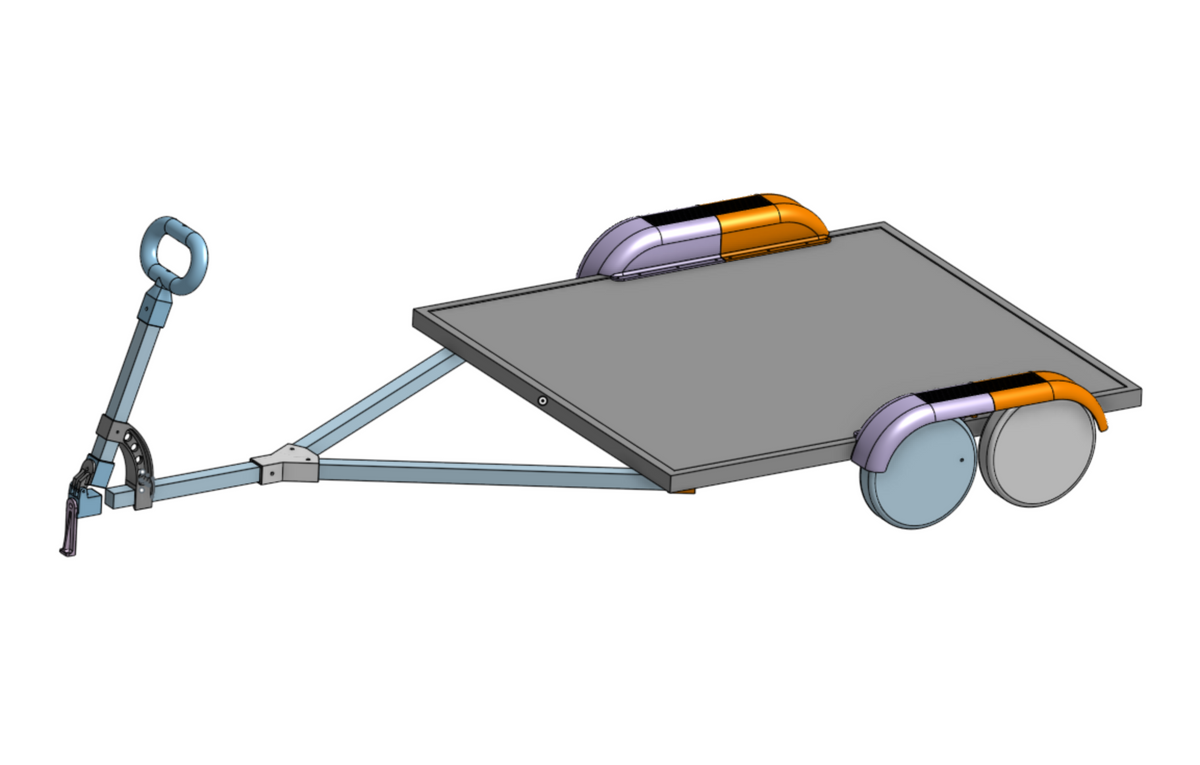
Flatbed Trailer
Let's tow the snake to the flightline in style!
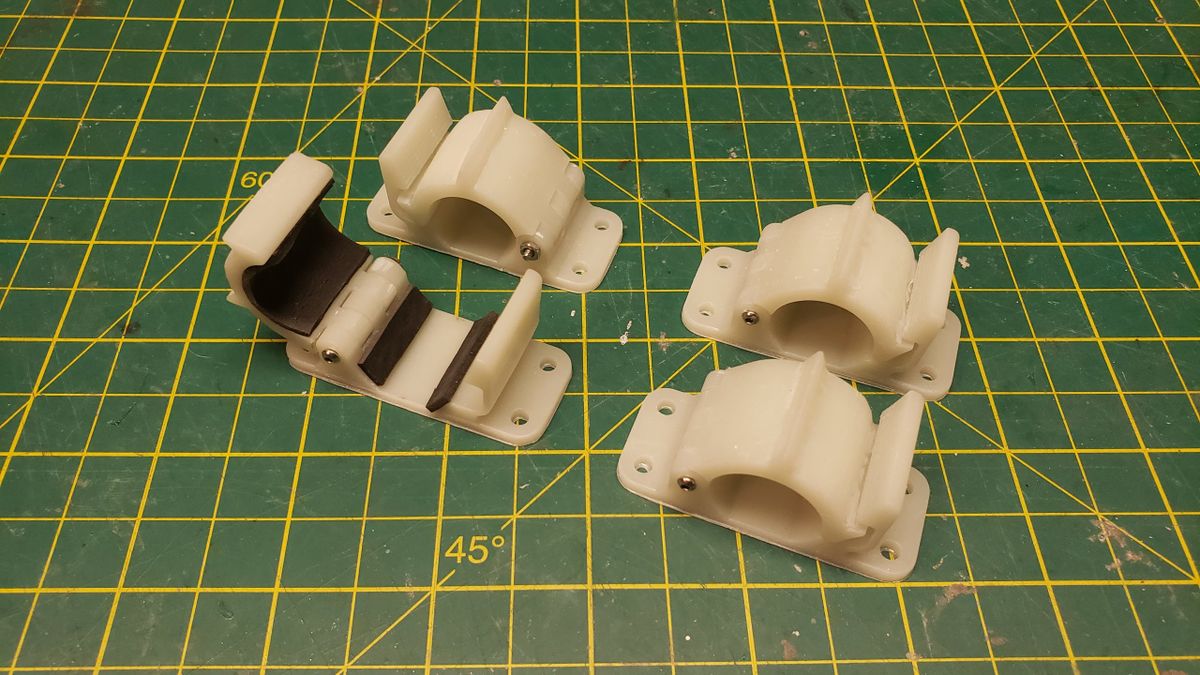
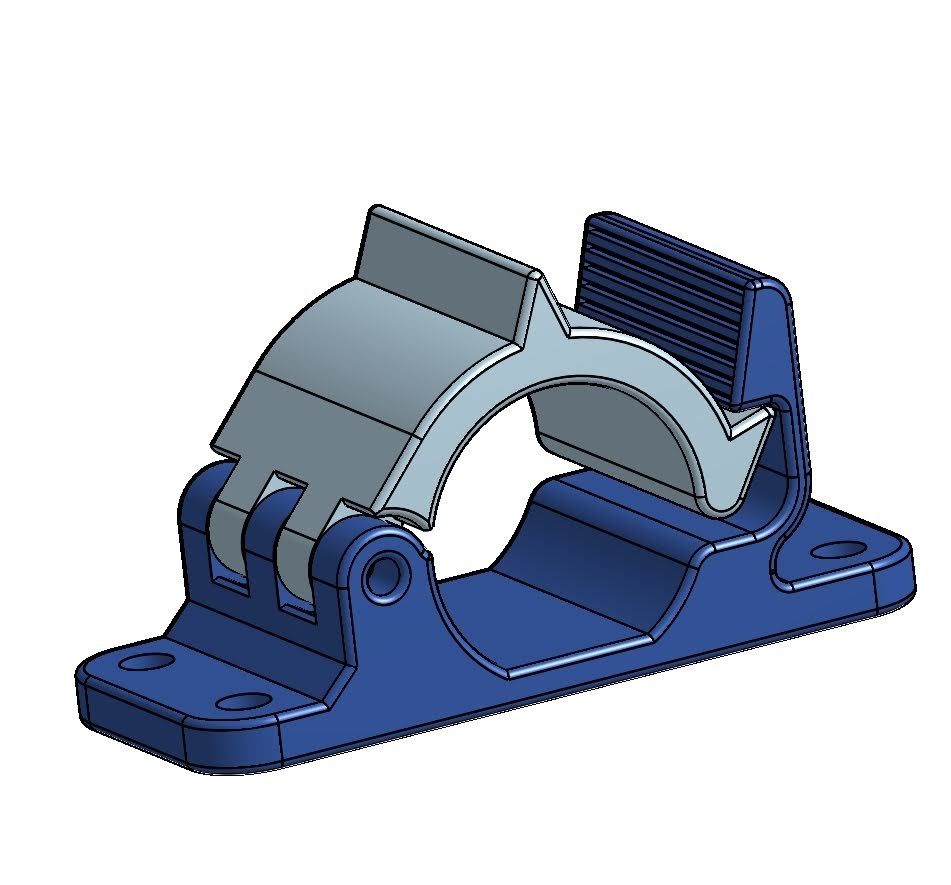
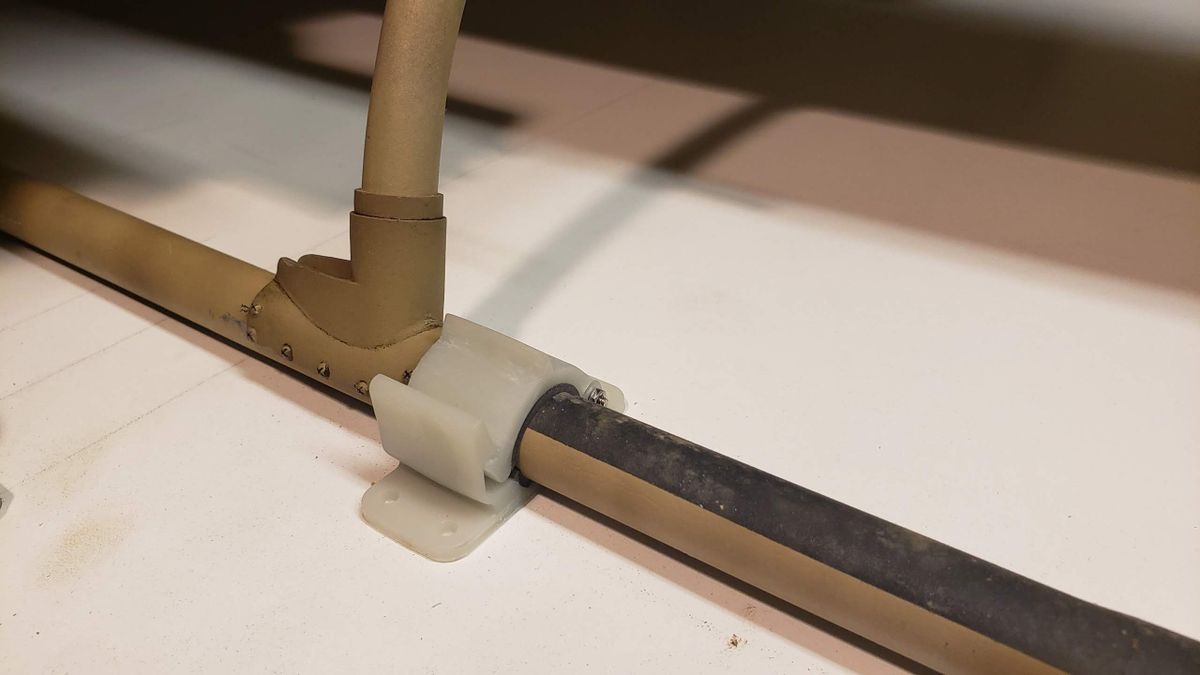
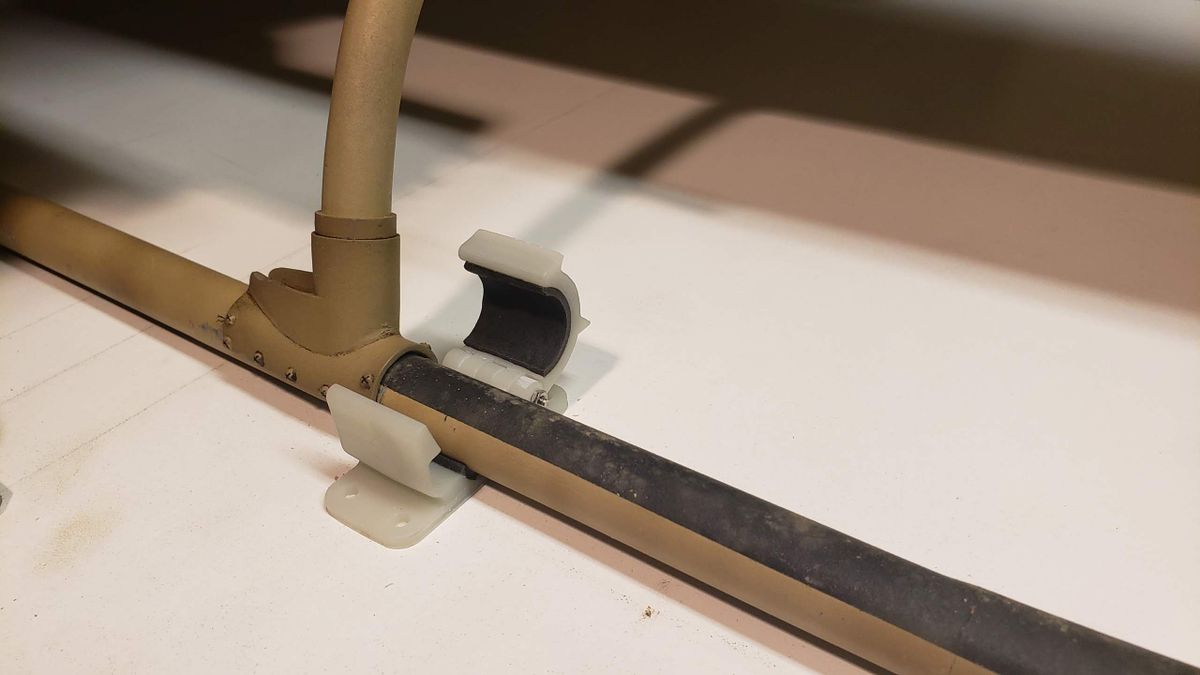
Tri-mode Flatbed Trailer and Skid Clamps
Let's make the trailer more useful than scale towing by an RC Humvee!
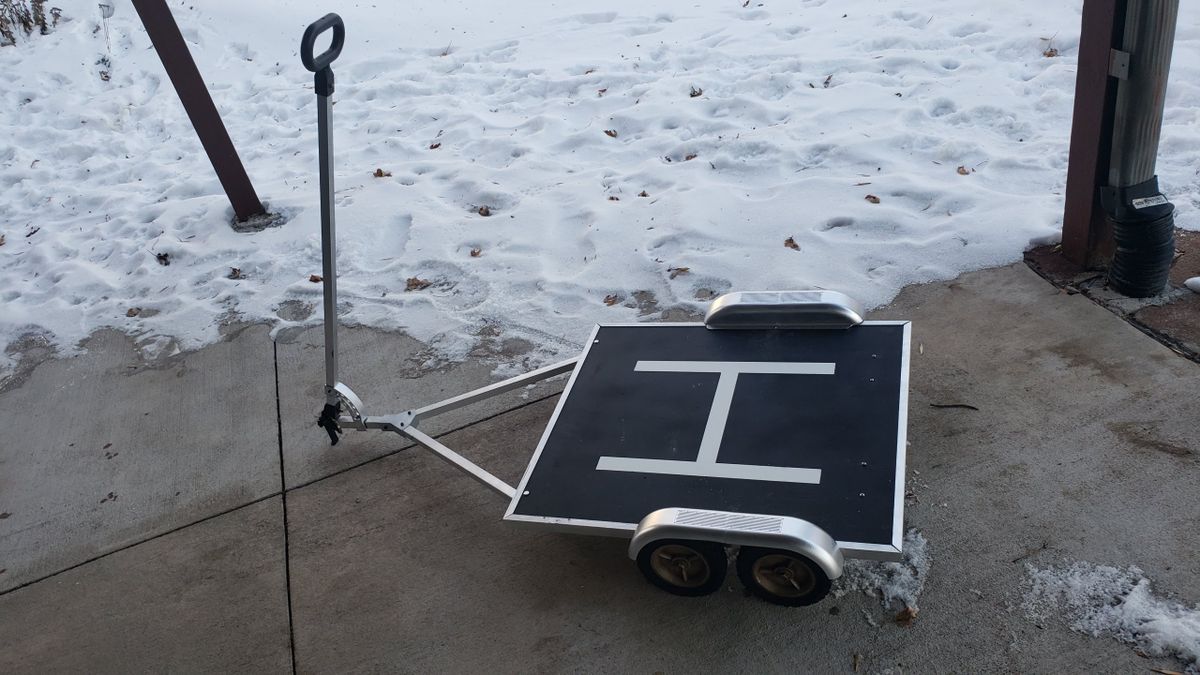
Tri-mode flatbed trailer for helicopter transport:
1) Towed by 1/6 scale RC Humvee
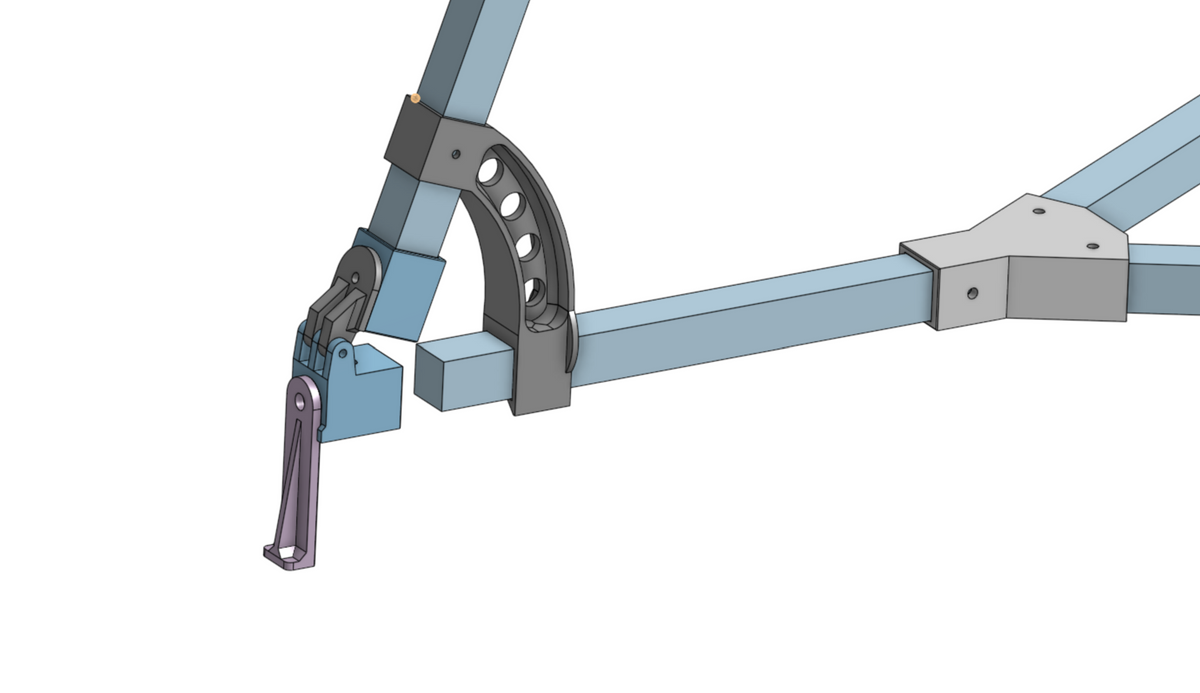
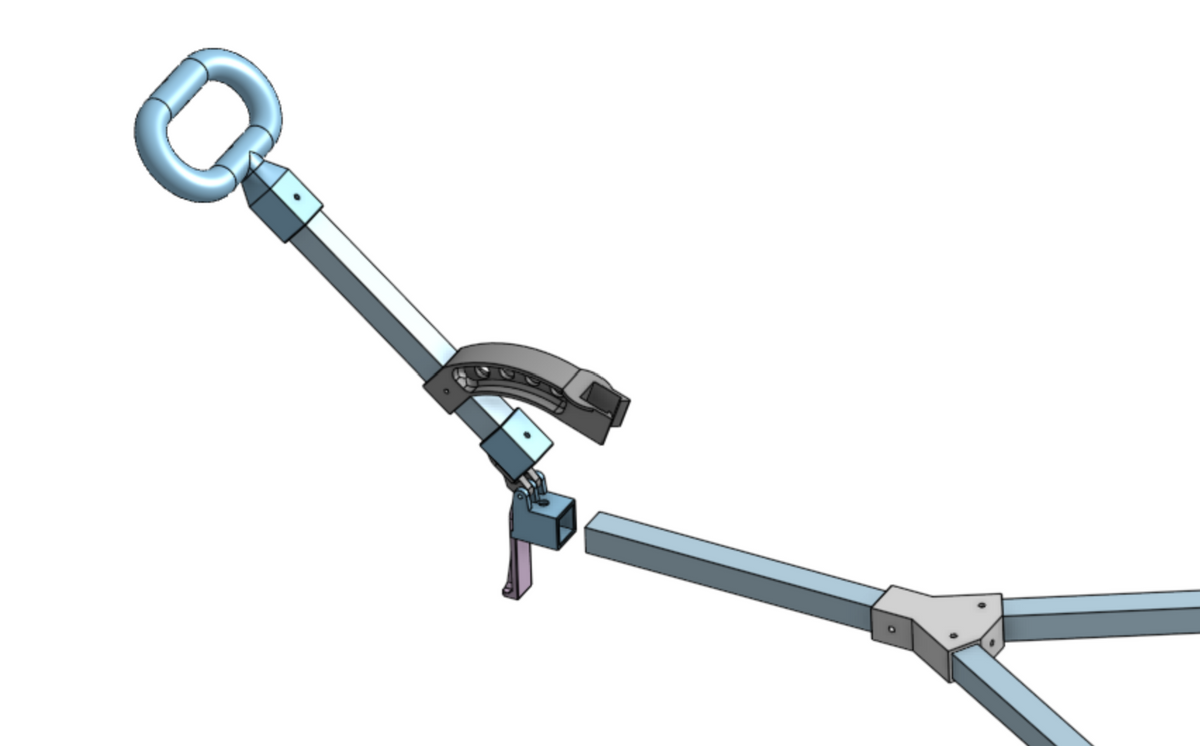
2) Towed by hand- the handle bar can rotate up and lock into a near vertical position while parked. The bottom of the tow bar features a foldable kickstand
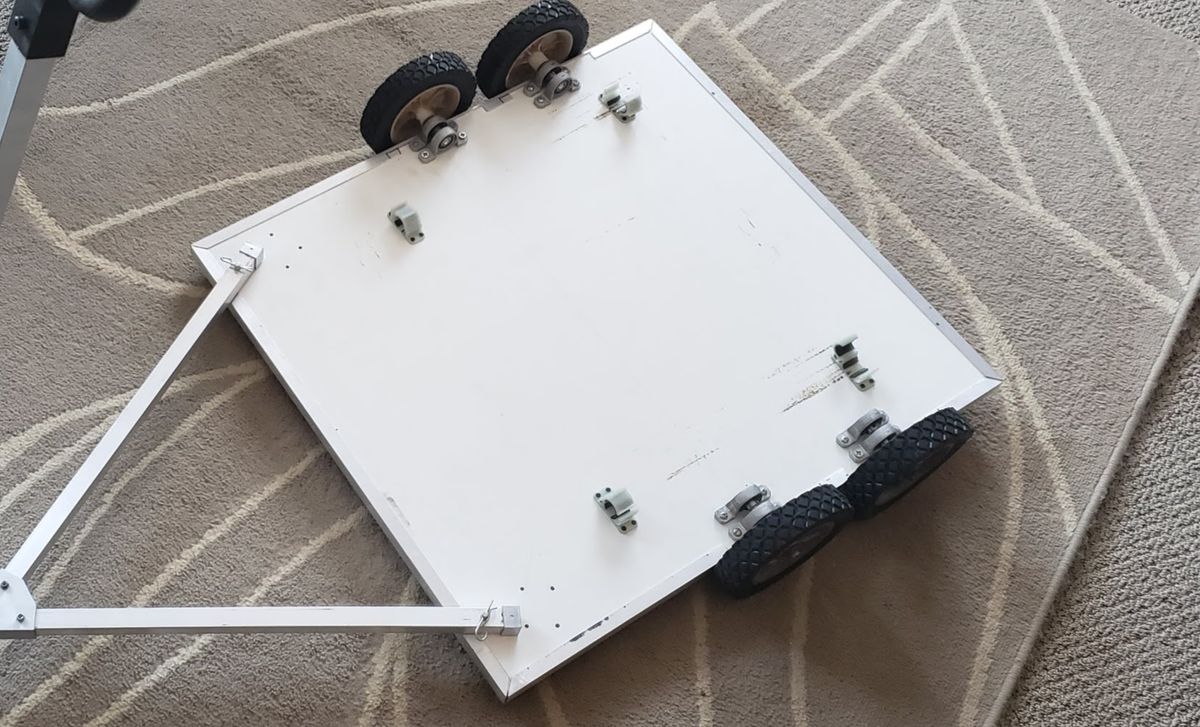
3) Flipped upside-down and used as a sliding drawer in the trunk of an SUV. Skid clamps lock down the heli during transport.
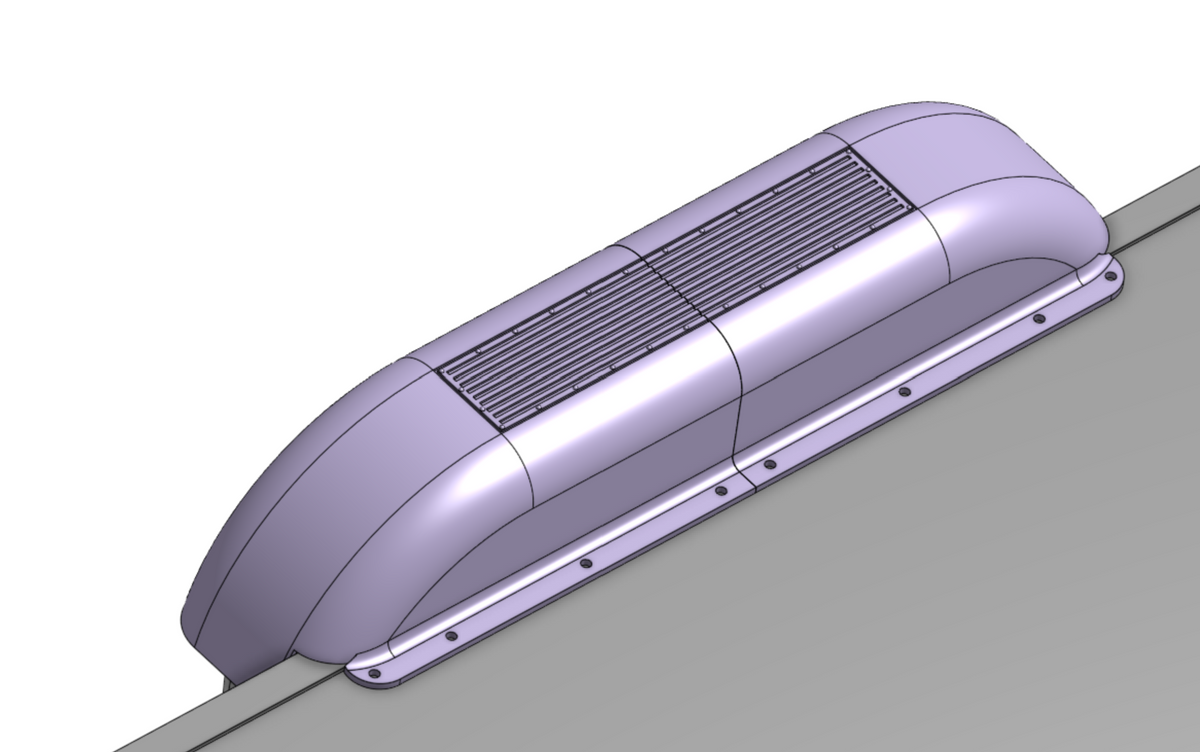
Except for the 3D printed parts (handle, connectors, kickstand, skid clamps and fenders), all parts can be sourced from a hardware store, such as 3/4" aluminum tubes, channels, pillow bearings, 10mm axel bolts, 5/8" particle board and cotter pins.
Smoke, Fire and Brass
Smoke, fire and brass shell ejection were things I had wanted to implement in the Cobra. Since it is virtually impossible to accomplish in a model, digital video effects will do for now😁
Riding the Sand Shark
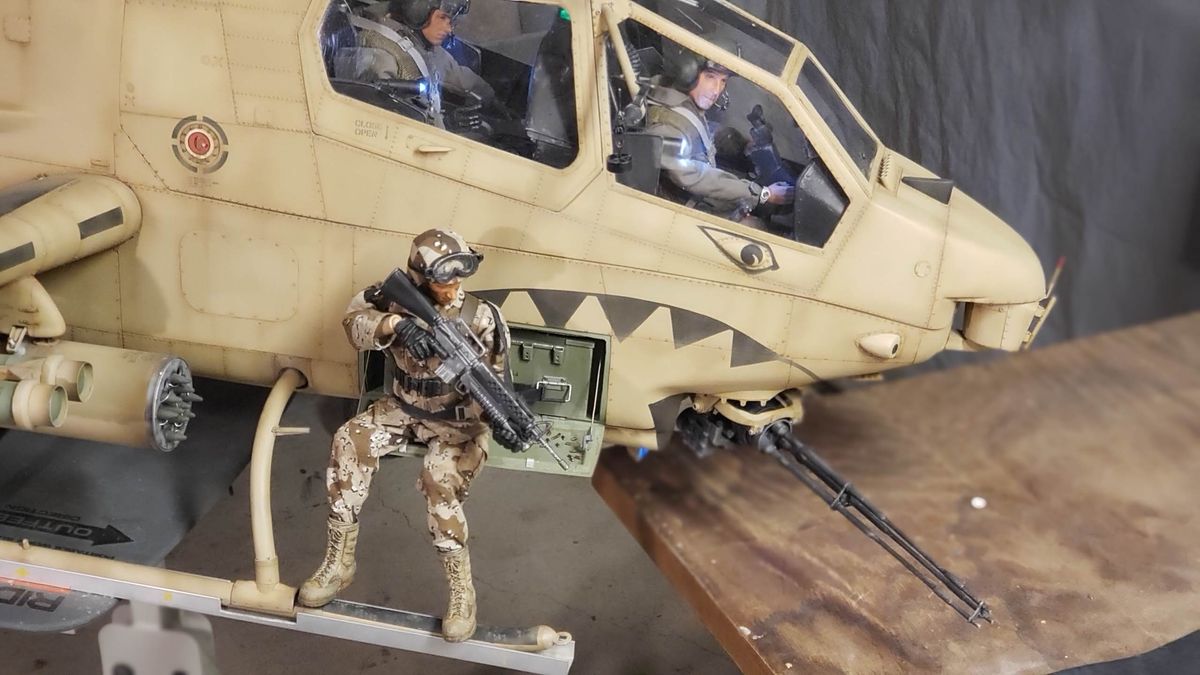
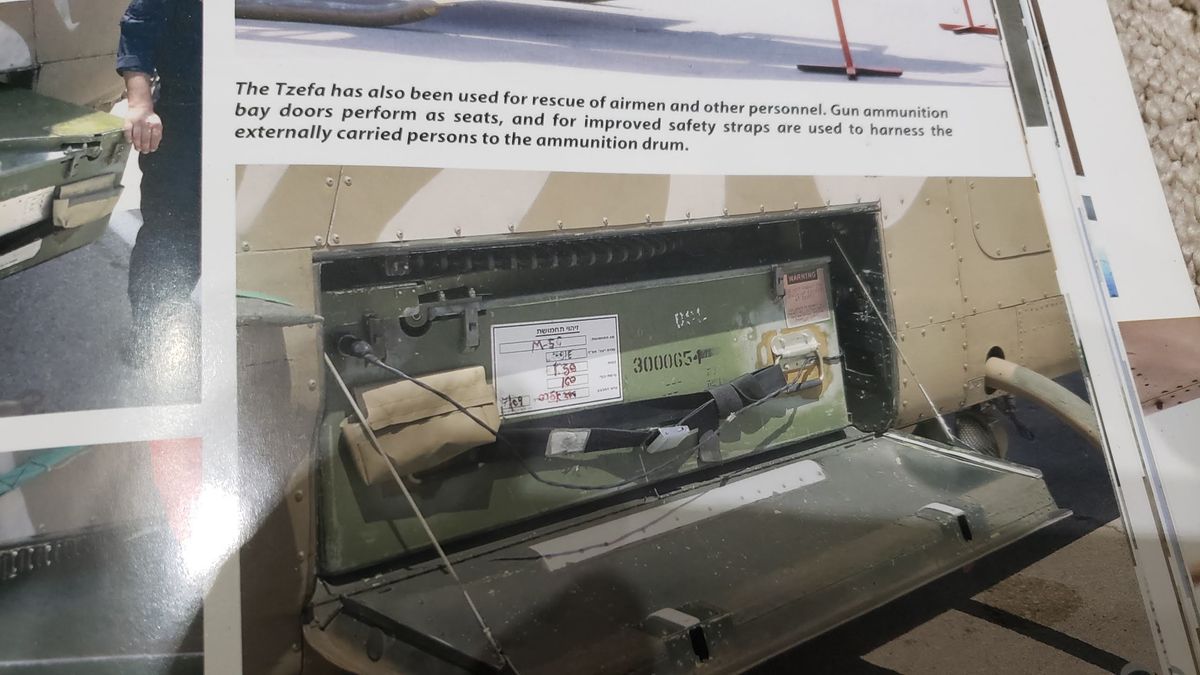
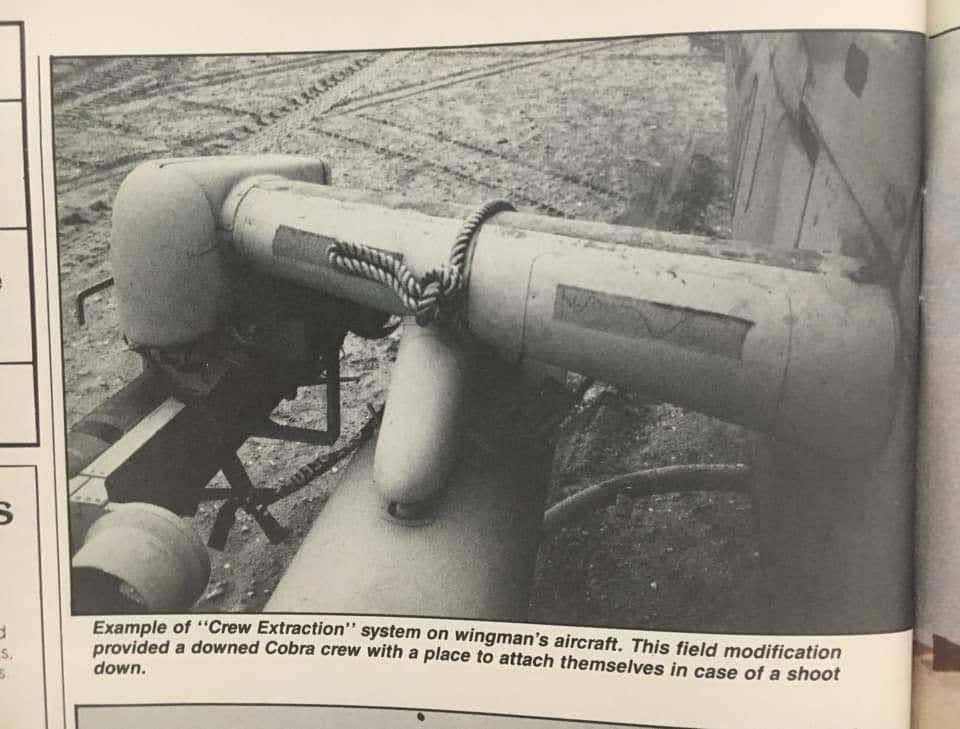
Some people don't believe the Cobra can carry external passengers. Well, here it is. In emergency exfil situations or if downed pilots needed a lift out of a hot zone, the cobra offers a decent external seats on both sides of the ammo bay. The Israeli Tzefa Cobra has a seat belt attached to the ammo drum as standard amenity. A US Army pilot sent me the B&W picture of a rope tied around the rocket pylon on the wing. The passenger rides it facing backward while holding on the the rope!
Smoke system for gun barrels
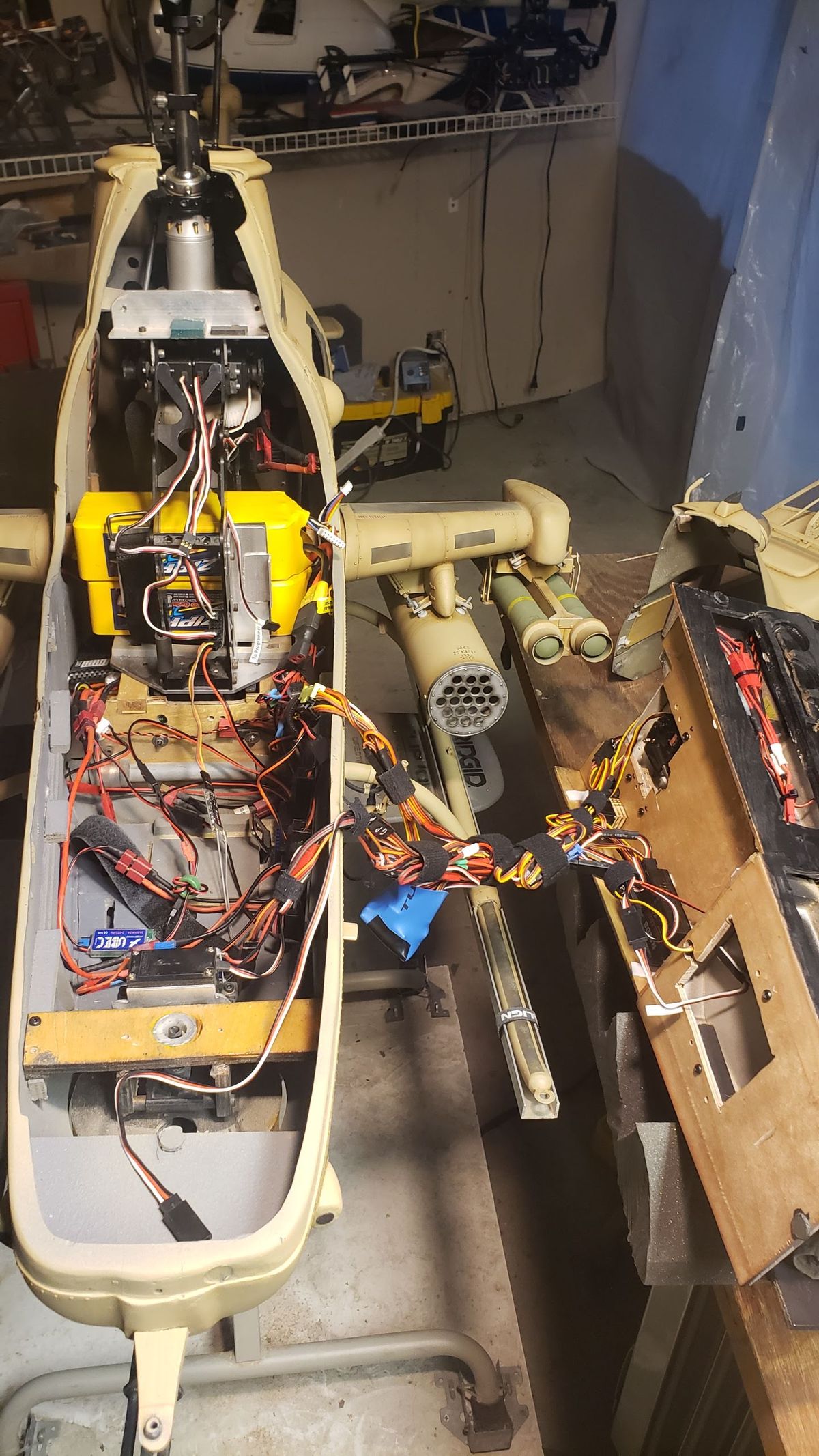
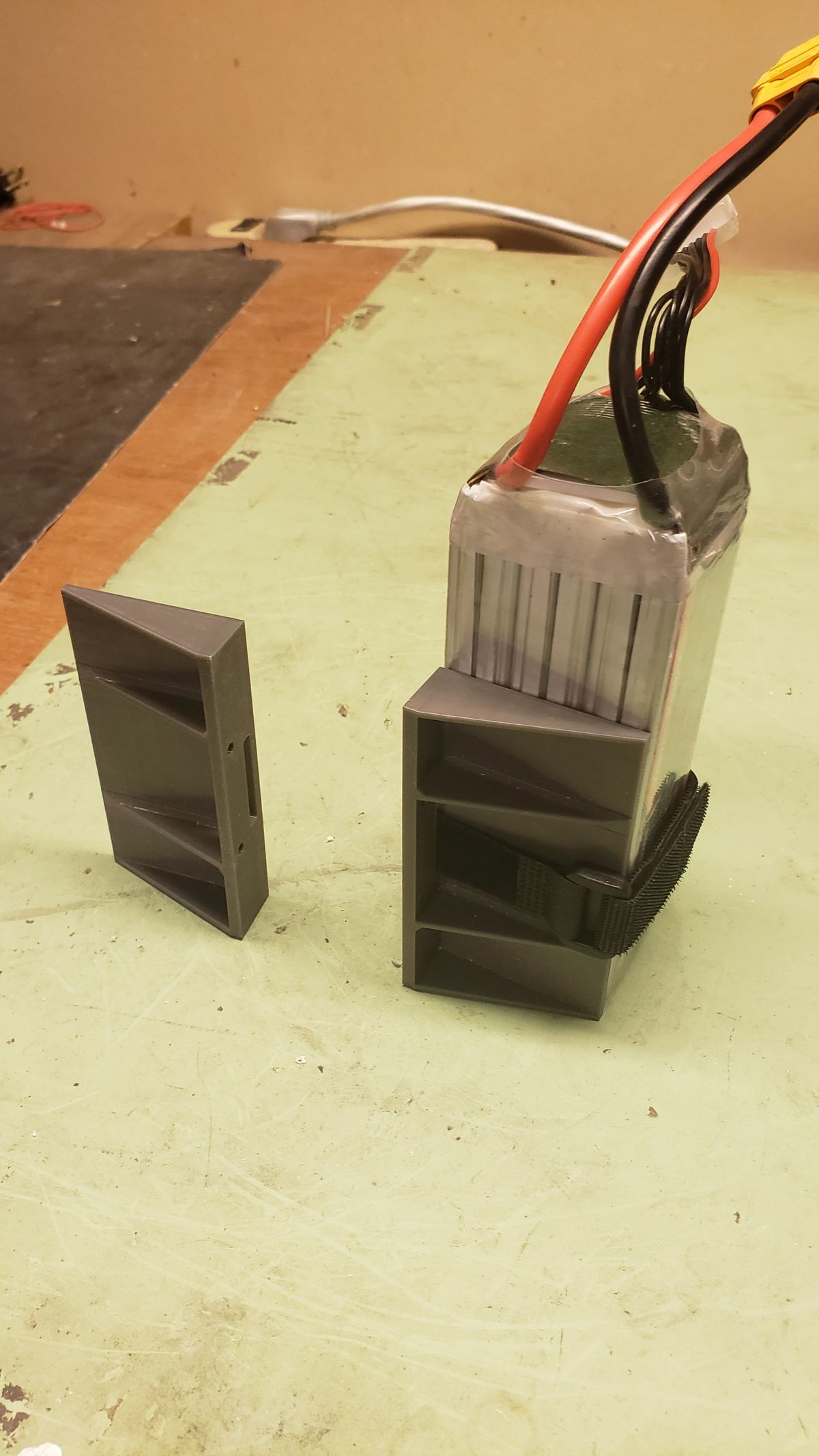
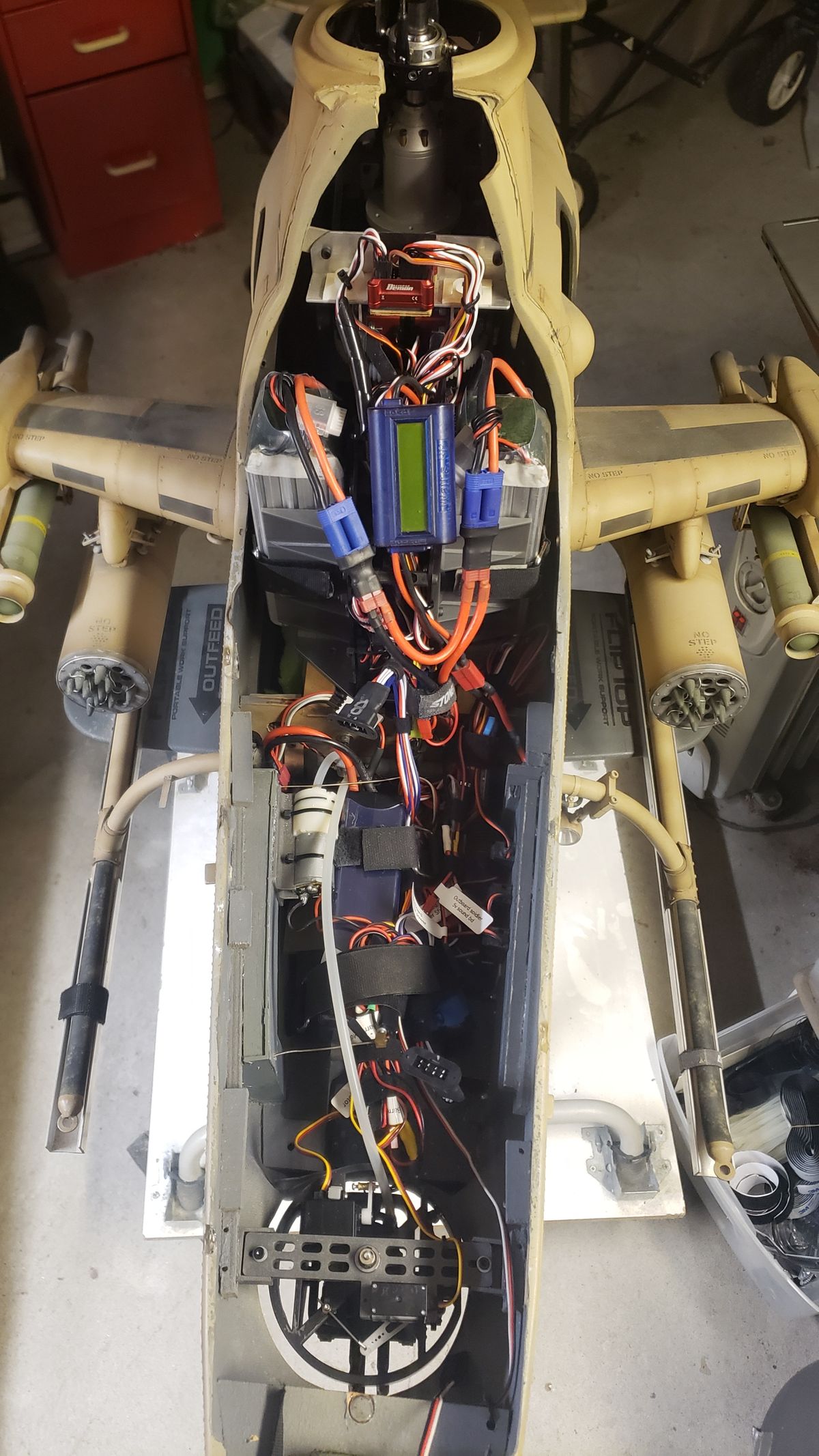
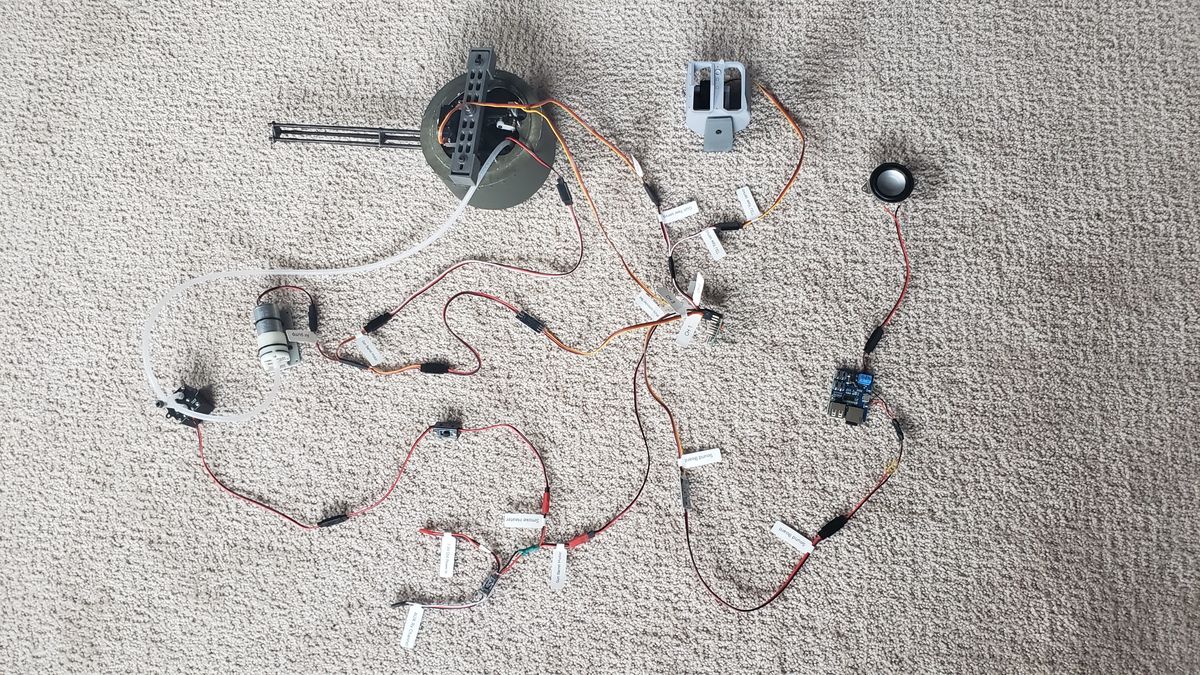
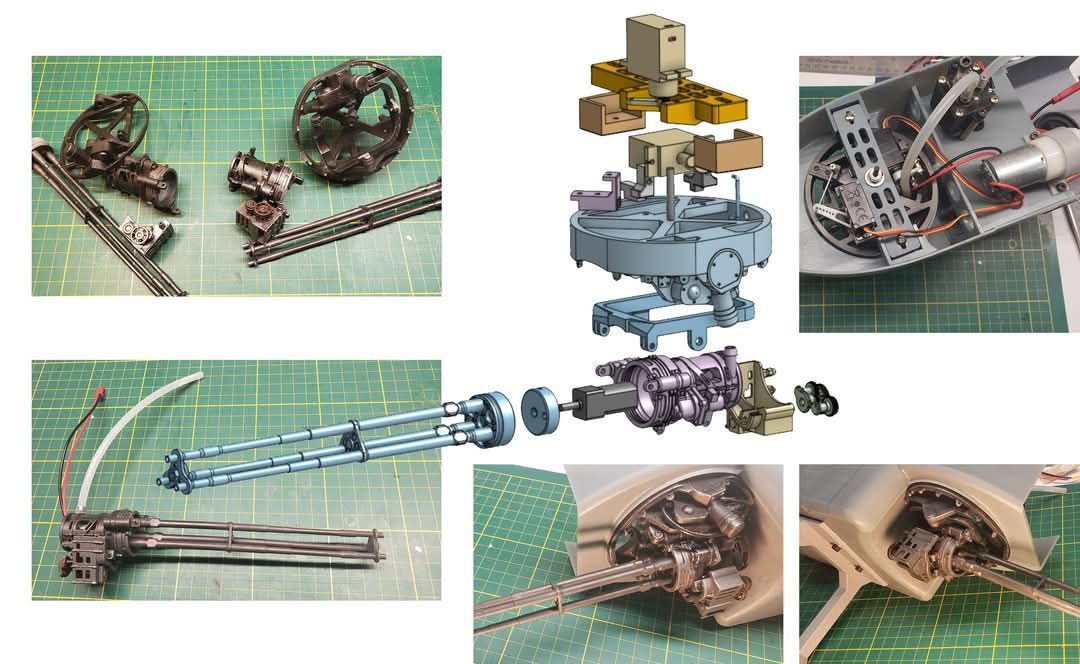
Since I've been making these systems for others' Cobras (Roban, Vario, LM, Alterbaum), it's time to put one in my own. This bird is already jam packed with electronics (animatronic cockpit and sound system), locating space for the smoke tank and pump was challenging in a narrow fuselage. Because of all the added contraptions in the nose, this model has the unusual problem of being too nose heavy. In order to achieve a better cg, the lipos have to be located rearward, standing vertically in a side saddle configuration. 2x 3d printed L brackets attached to the side frames allow the lipos to be strapped tight using hook n loop straps. The nose area is now free to house an rx battery and miles of cables and electronics.
13 Comments
Hi Patrick, we will up the size limit on videos. As for posting, we have an “Other Scale” category under which you can choose Len Mount (but not the specific model).
Hey Patrick, we bumped the upload limit and it appears that you've taken full advantage! This video looks great! Of course, the subject matter helps. ; )
I understand native video streaming adds to the server expense. But I think it's a crucial feature to reduce usability friction. Hope you negotiated a good deal with a CDN such as Akamai:) Alternatively, you could allow embedding FB video, where most scale videos are already hosted.
Often overlooked but always appreciated!!
That looks excellent Patrick
You do great work Patrick !!
very Realistic wow
Very nice machine !
Motion including arms is awesome, I find it realistic. Must be very visible in flight. Well done!
It was a static display project, I've never flown it with the outboard passenger. His seat- the ammo bay door is supported by 2 tension cables, therefore not a rigid platform. I'm afraid he'll be bouncing up and down during flight, too risky.
How heavy is this bird now?
29.5 lb flight weight.
Nice build, specially the CG optimized Lipo position. Impressive features at the front gun.