


Battery Charge Case Basics
Battery Charging Cases.
For all us electric powered heli types there are any number of ways to go about building yourself a portable charging station. And there are inumerable examples of peoples creativity and ingenuity in building them. But regardless of appearances they all have the same basic components:
1. A Power Supply Unit (PSU)
2. A Charger
3. A Case
There are many basic, inexpensive chargers that can plug into a wall outlet and charge up a number of batteries overnight but what we are looking for is a portable option with the ability to charge batteries at the field and in a reasonably short period of time. This requires some higher grade/capacity components.
The first question that needs to be answered is how much capacity will you be needing. The way to answer this is to start with what you have in terms of batteries and what they require in terms of volts and amps to charge them in a time frame that suits you needs. The more amps your charger is able to provide will determine the speed and/or quantity of battery charging depending on your charging philosophy (ie. only ever using 1C and/or occaisonally 3C or somting inbetween).
The more capable chargers require a PSU, and the ability of that PSU to meet the demands of the Charger will affect the final result. A PSU is essentially a large transformer that converts the normal wall outlet or field generator 110v(or 220v depending where you live) to a lower voltage with higher current output as needed by the Charger.
Here is a list of some common PSUs and there capacities and dimensions:
FeatherM (2 units) 24v 75A 1600watts 256x90x90
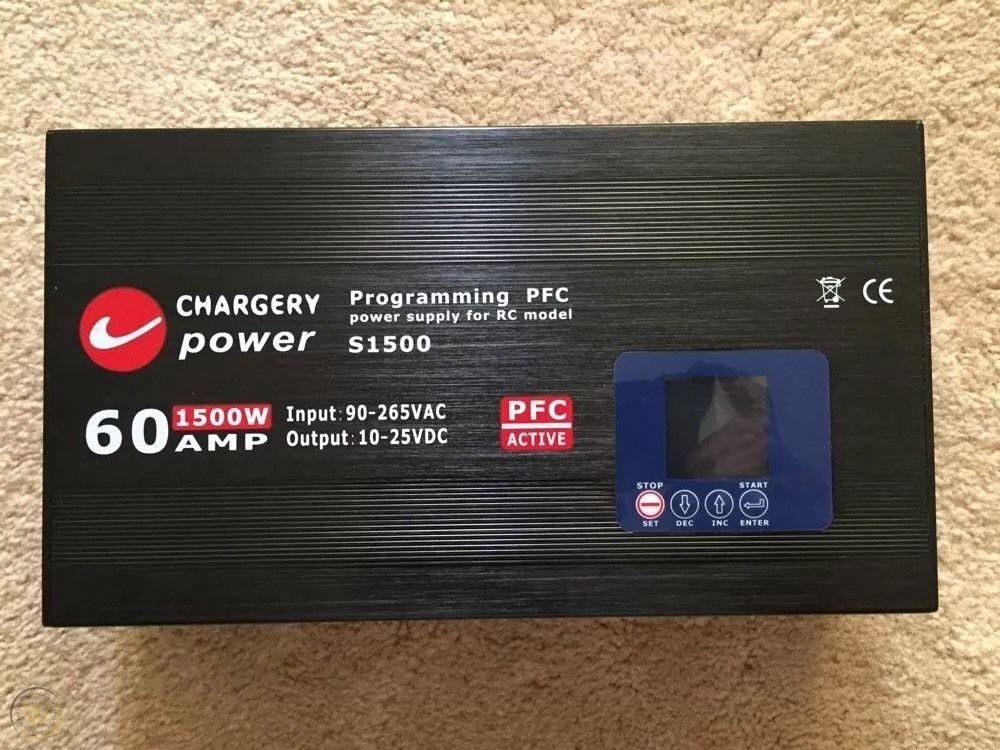
Chargery S1500 30v 60A 1500watts 252x145x68
Efuel 1200W 30v 50A 1200watts 305x140x78
Turnigy 1200W 30v 50A 1200watts 305x170x85
RC Logger 1200W 30v 50A 1200watts 305x170x85
2ZO RC 24v 47A 1150watts 317x114x83
Mean Well RSP 1000 24v 42A 1000watts 295x170x91
The Chargery S1500 is a good example of a very capable PSU with a reasonably sized footprint. Any PSU capable of 30v and 60A or better output is a solid contender to power any high quailty Charger.
The Chargers will also have a Volts and Amps limit as measured in Watts capacity and an ability to supply it to one or more channels. Here is a list of some common high quality chargers and what they can supply per channel:
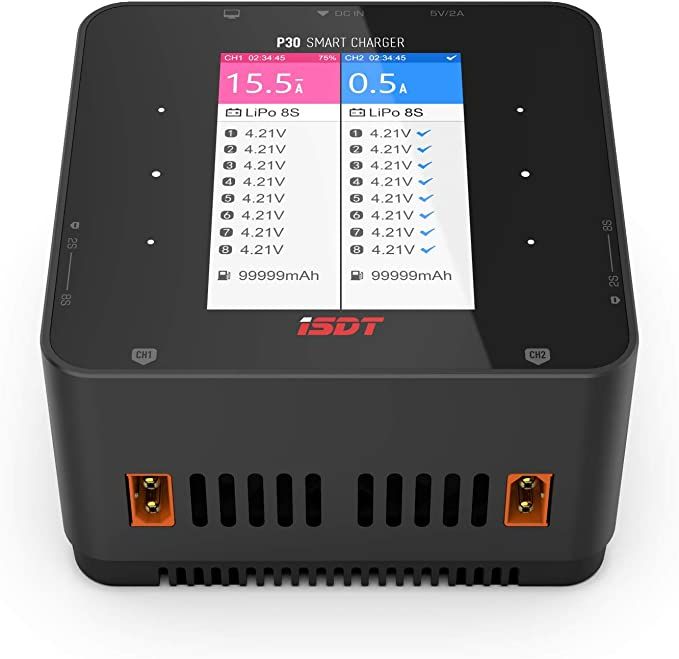
iSDT P30 2ch 60A 2000W 110x110x65 30A 1000W/1000W
iCharger 406 2ch 70A 2000W 171x118x59 40A 1000W/1000W
HiTek X2 2ch 30A 1400W 200x140x55 30A 700W/700W
GT1200 1ch 40A 1200W 150x167x91 20A 600W/600W
Prodigy 640 1ch 40A 1000W 148x167x78 20A 500W/500W
GT500 1ch 20A 500W 146x143x87 20A 500W
iSDT 620 1ch 20A 500W 115x130x52 20A 500W
The key here is to understand that to get a charger to deliver its rated Watts you need to feed it at least that amount which is why choosing an appropriate PSU is important.
For example, using the Chargery S1500 PSU to feed the SDT P30 Charger will limit the P30 to a 1500Watt output, in this case 750Watts per channel. Although the P30 charger isn't reaching its full 2000Watt potential that 750 Watts per channel is still quite substantial.
Our LiPo math tells us we could charge:
- Two 6s 10,000mAh @ 2.5C (one on each channel) or,
- Four 6s 5000mAh @2.5C (2 in parrallell on each channel) or,
- Six 6s 5000mAh @1.5C (3 in parrallel on each channel)
Once you have chosen your components you'll need to decide what size case to accomodate them.
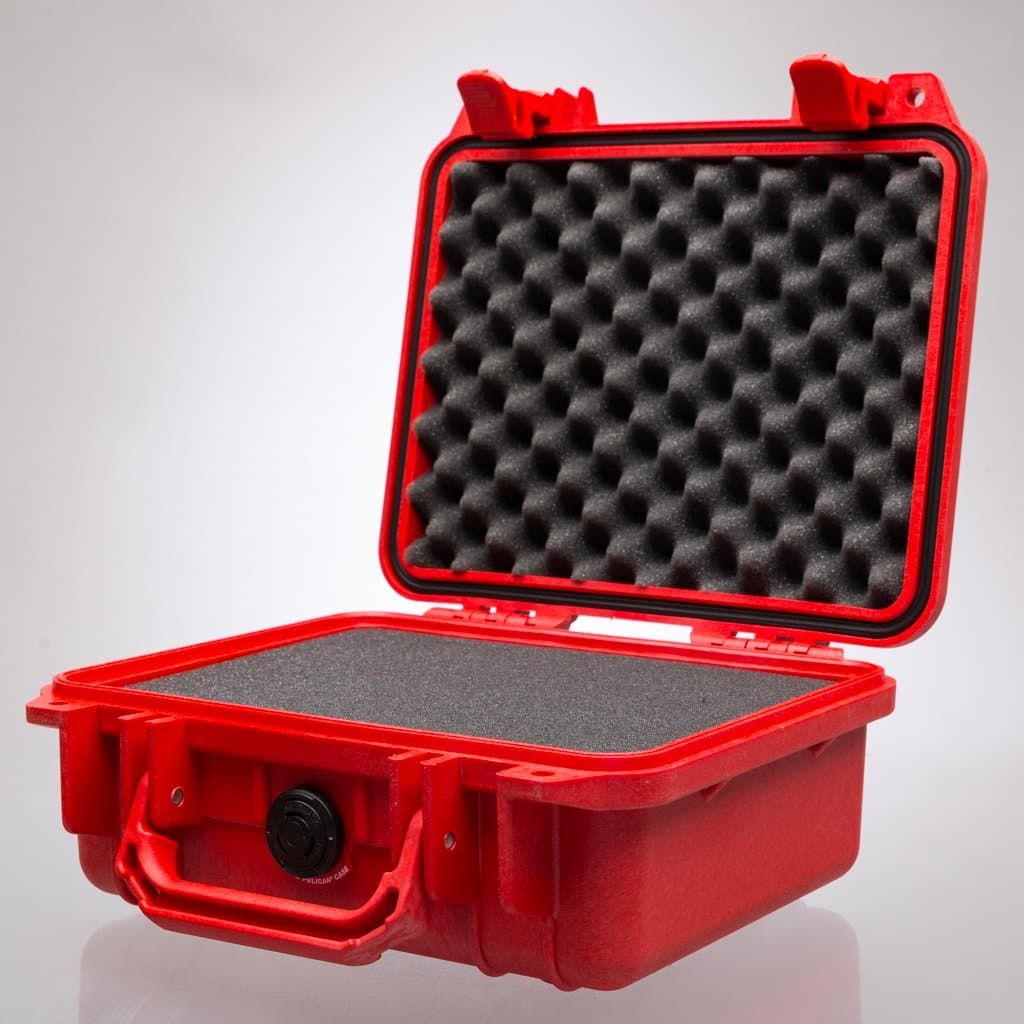
Do you want something only big enough to house the PSU and Charger? Or maybe someting larger to have some 'floor space' on which the batteries sit while they charge. There are numerous sources of hardened 'Pelican' type cases available.
The other items of consideration are:
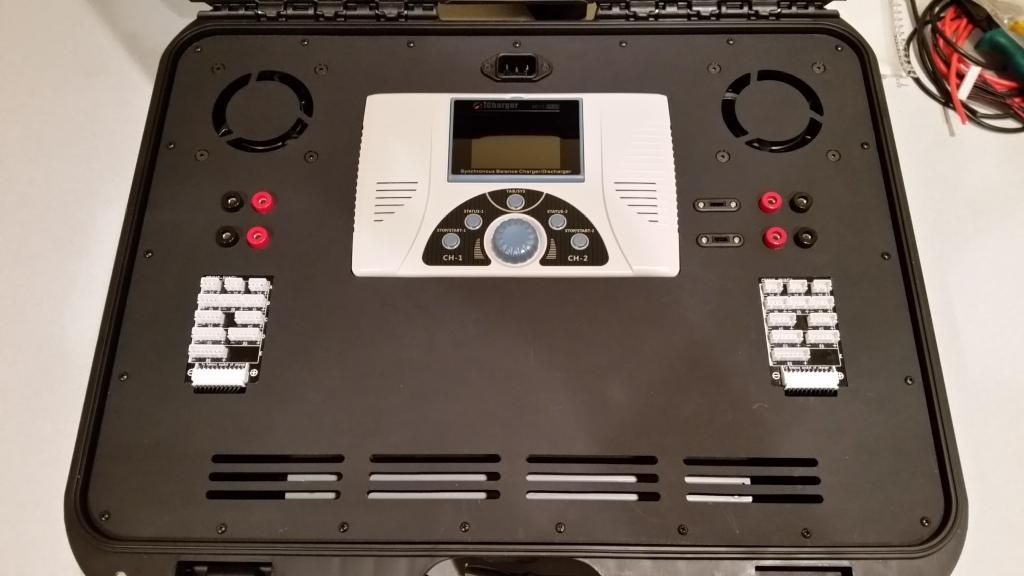
-Switches
-Cooling fan(s),
-Charging leads/plugs
-Balance boards
-Power Cord
-Many people even opt to have a custom panel laser cut to give their charging case a clean, professional and unique look.
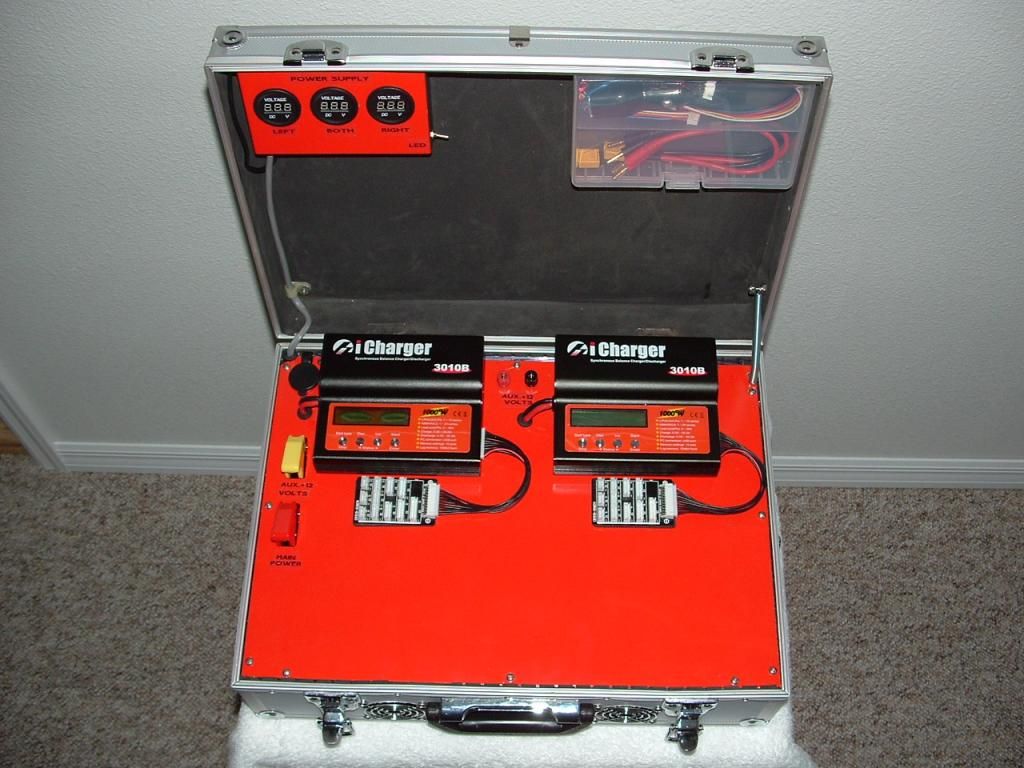
With a little research and planning you can easliy have a portable charge case to meet all your needs, and it can be as basic or ornate as your heart (and wallet) desire.