


Density altitude can be dangerous
THE WORST sound a heli pilot can hear during flight is NO SOUND. If your engine fails in the "dead zone" there is little you can do but keep your rotor spinning and make a flat landing. Even if you detect an engine flame out instantly, you still only have seconds to react. With heavy models, even fast reactions often cannot save your model from an ugly thud and ensuing splatter. Daffy Duck and I call it "thplatter."
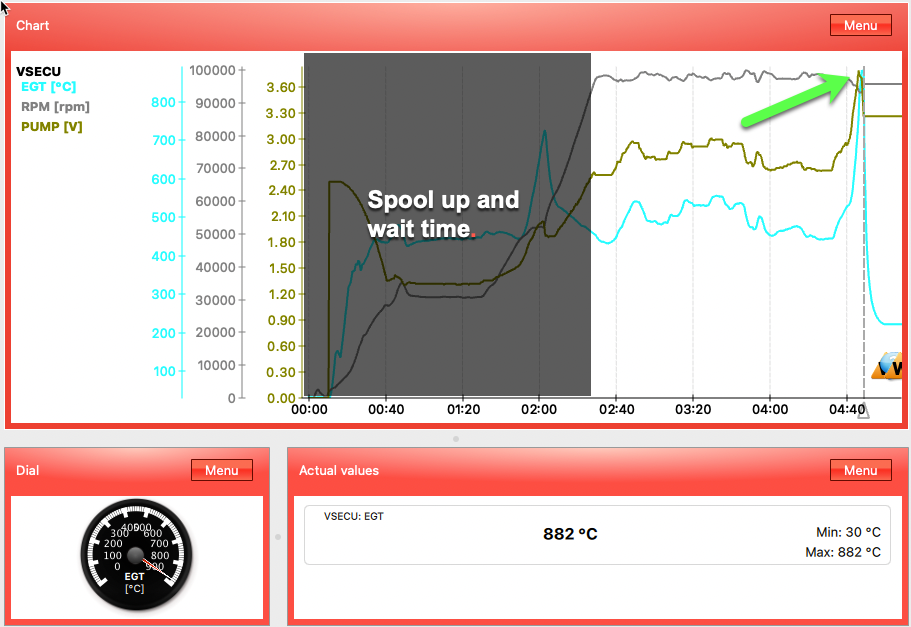
I know this well. Last weekend, while performing a demonstration flight at Warbirds Over Denver in front of 100 or more onlookers, my Jakadofsky Pro 5000 (a bulletproof engine under normal conditions) automatically shut down when the exhaust gas temperature reached 882 C (1,641 F). In an instant I was powerless at approximately 50 feet up -- in the dead zone. The dead zone varies by model, of course, but generally speaking you are not in for a fun time if your large (heavy) scale bird is between 25-70 feet when the engine quits. Below 25 feet, you can usually make a soft landing with the energy remaining in the rotor system. Above 70 feet, however, it should be possible to lower your collective (-2 degrees should work) and get the heli pointed into the wind for a decent auto. For my 54lb Vario Lama, all I could do was keep it flat and cushion the landing with the remaining energy in the rotor system. Even with -2 degrees pitch on the descent, it wasn't enough to prevent my beautiful bird from turning into a dead bug. Why did this happen? In two words: density altitude.
Your Density is Your Destiny
Density altitude is the "pressure altitude corrected for nonstandard temperature variations." OK, that says nothing to most RC pilots. In plainspeak, density altitude is a measure of the altitude the helicopter actually experiences. For example, if your flying field is like mine and situated 5,600 feet above sea level, taking off at my field is like flying at 5,000 feet in Florida. Why does this matter? Flight characteristics of all aircraft deterioriate as their altitude increases. The air is simply less dense the higher you go. There is less lifting force per square foot and less oxygen to feed internal combustion engines like turbines and gasoline-powered engines.
The point of this article is to focus your attention on the role of density altitude with expensive scale helicopters; especially those powered by turbine engines. Flying in Denver, Colorado has given me a keen awareness of the hidden danger of being unaware of weather conditions which can conspire with altitude to cause sudden engine failure. Pilots of electric helicopters might think they are out of the woods on this one, but remember, even electric motors can overheat if you strain them enough.
For any engine, combustion or electric, lack of oxygen density decreases aerodynamic efficiency in the rotor system. This, in turn, causes the pilot to input more collective to sustain flight performance. More collective requires more power. Now, couple that with the engine's inability to generate as much power and you can see that lack of air density has a compound effect on the engine. The heavier the aircraft, the worse the problem, especially when performing hover or climbing maneuvers.
To compute density altitude, download Density Altitude + from the Apple App Store or Air Labs Density Altitude app for Android.
What Caused the Engine to Shut Down?
To appreciate why my normally reliable turbine shut down, you have to appreciate the 4 H's. High temperature, high elevation, high humidity and heavy load. Any one of these factors can cause issues, but when three of them combine, disaster lurks at every hover or climbout. In my case, I lifted off at around noon. At that time, I was told that the temperature was 85 degrees. I did not double check this number, but after the flight I looked at the airfield data and it was 95 degrees. Our field is located at an elevation of approximately 5,600 feet. To the helicopter, I was flying around 9,500 feet. At the beginning of the demonstration, I performed hovers about 15 feet off the deck. Hovers damand the most power of any scale helicopter maneuver because there is no effectivetranslational lift created by the forward movement of the helicopter. Following several minutes of forward flight, I transitioned into a high hover (again, taxing the engine). Following that, I flew across the field and into a 30-degree climb for a stall turn. After exiting the maneuver, the engine abruptly shut down.
A review of the telemetry shows how the climb caused a spike in pump voltage and EGT (exhaust gas temperature). The entire episode occurred over the course of maybe 7 seconds.
Preventative Measures & Tips
To prevent this episode from repeating itself, I have the following recommendations (for myself and anyone who cares):
- Take note of the density altitude. You can use an app or do fun math at the airfield.
- In your transmitter, set up audible warnings to go off at gradually increasing temperatures. For Jakadofsky engines, I recommend 550C, 635C and 700C. The engine shuts down automatically at 850C. This will give you time to unload the rotor before the engine overheats. Normally, temperatures will restore themselves quickly. If you do get a warning, transition into forward flight and descend to a height below 20 feet just in case.
- Always check your logs to ensure that your average and maximum EGT values are within the indicated guidelines for your engine.
- For pilots operating at low altitudes, much of what is written here will not apply to you. But, if you do travel to events, you just might have to pull out your DA app and double check the data.
The Fate of the 1/4 Scale Lama
As upsetting as it was to watch this beautiful bird absorb such a hard landing, rest assured that I have already ordered replacement parts and intend to have the Lama in the air before Fall!