
What's Under the Hatch
Pop the hatch on any RC airplane and you will find the same four things. Learn them once and every airplane after this one makes sense.
The Four Pieces
- Receiver: hears your transmitter and passes the orders along.
- Servos: small motors that move the control surfaces. One for the elevator, one for the rudder, one or two for the ailerons.
- Speed controller (ESC): the throttle for an electric motor. Most also power the receiver and servos through a built-in BEC.
- Battery: runs the whole show.
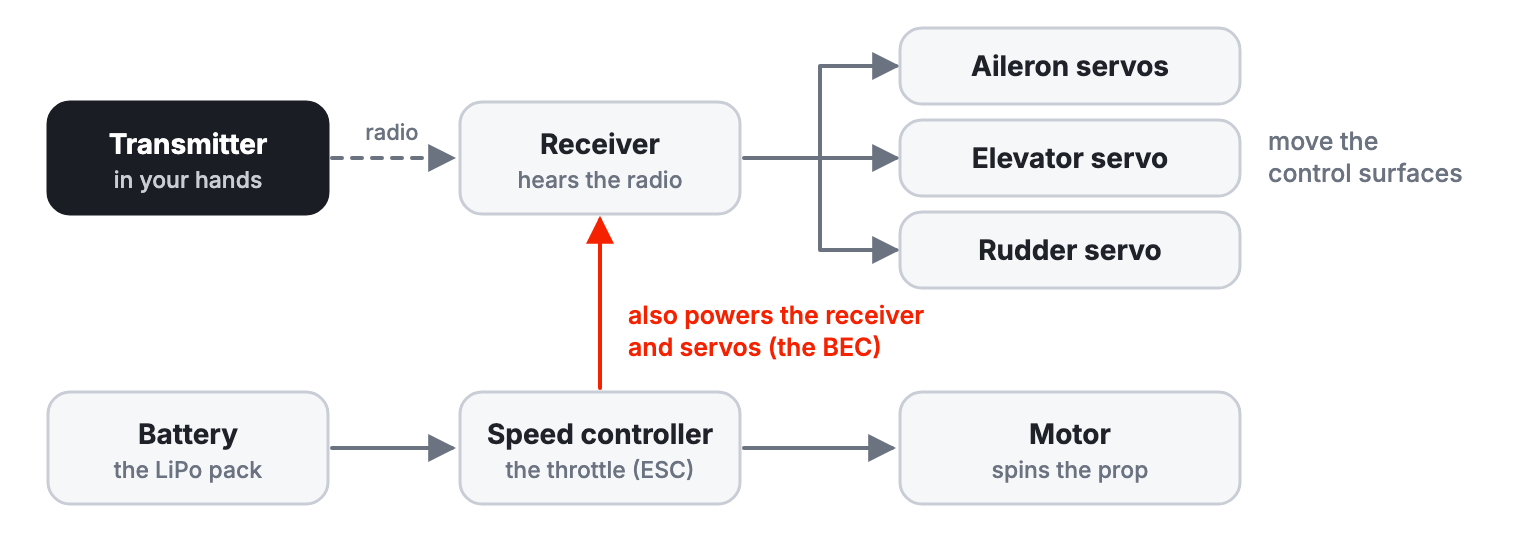
A glow or gas airplane swaps the ESC for a throttle servo and carries a separate receiver pack. Which pack to choose is covered in Powering Your Bird.
The Check That Saves Airplanes
Before every first flight, stand behind the airplane and move the sticks.
- Right stick right: the RIGHT aileron goes UP.
- Stick back: the elevator goes UP.
- Rudder left: the rudder moves LEFT.
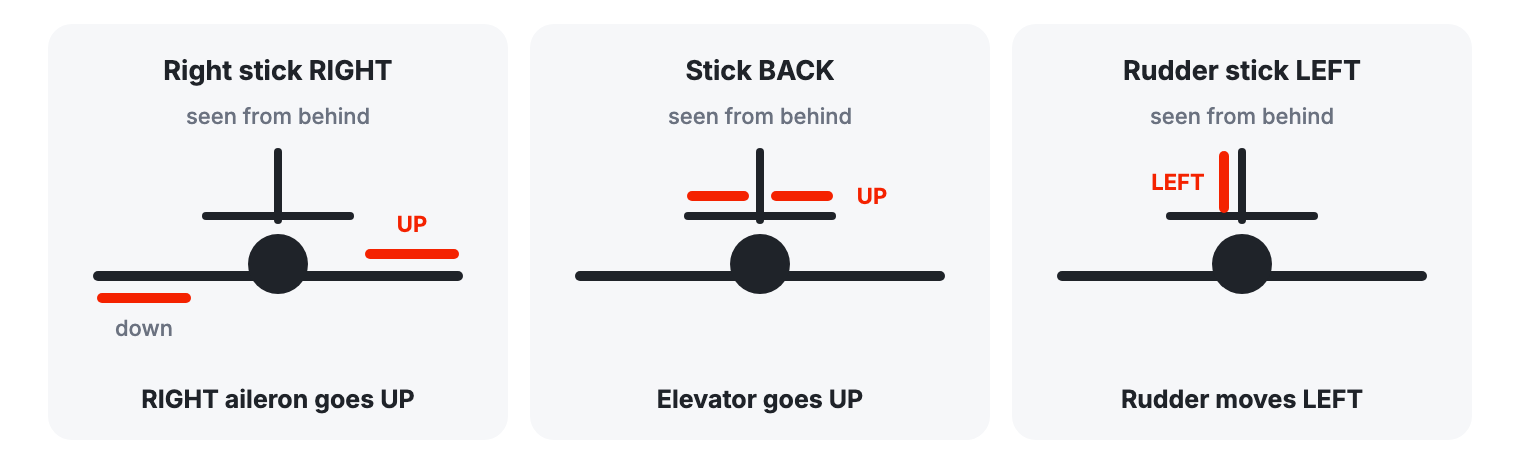
A reversed aileron has ended more maidens than any other mistake. It takes ten seconds to check.
Balance It
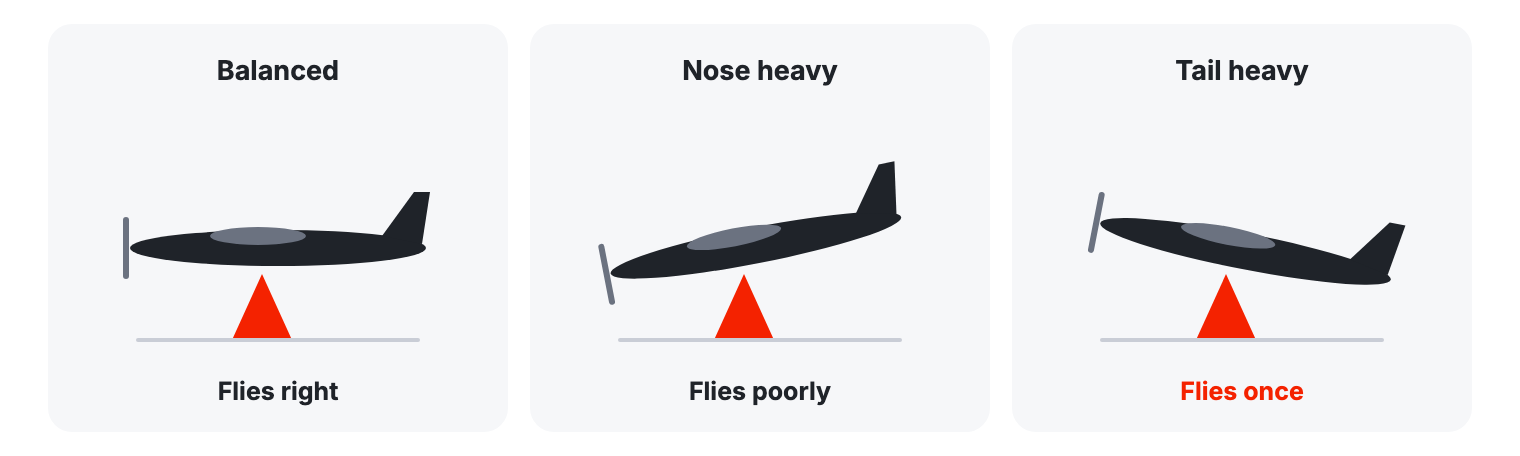
Every airplane has a balance point (the CG) marked in its manual. Balance it there with the battery installed. Nose heavy flies poorly. Tail heavy flies once.
Throws and Expo
Set the control throws to the manual's low rate numbers for your first flights, and dial in some expo so the sticks are gentle around the middle. You can always add more later.
A Stabilizer Is Not a Pilot
A gyro or stabilizer smooths out the bumps and can save a beginner. It cannot fix a bad balance point or a reversed surface. Mechanical setup comes first.

