
Light Is Right
In a glider, every gram you leave out is a gram the sky does not have to lift. The electronics are simple, and they are small on purpose.
What's Inside
- Receiver: hears your transmitter.
- Servos: small and light. Two is enough for a rudder and elevator trainer. A full wing with ailerons and flaps uses six.
- Speed controller (ESC): on a powered glider it runs the motor and powers the receiver through its built-in BEC. Turn its brake on so the prop folds.
- Battery: the flight pack on a powered glider, or a small receiver pack on a pure sailplane.
Balance Is Everything
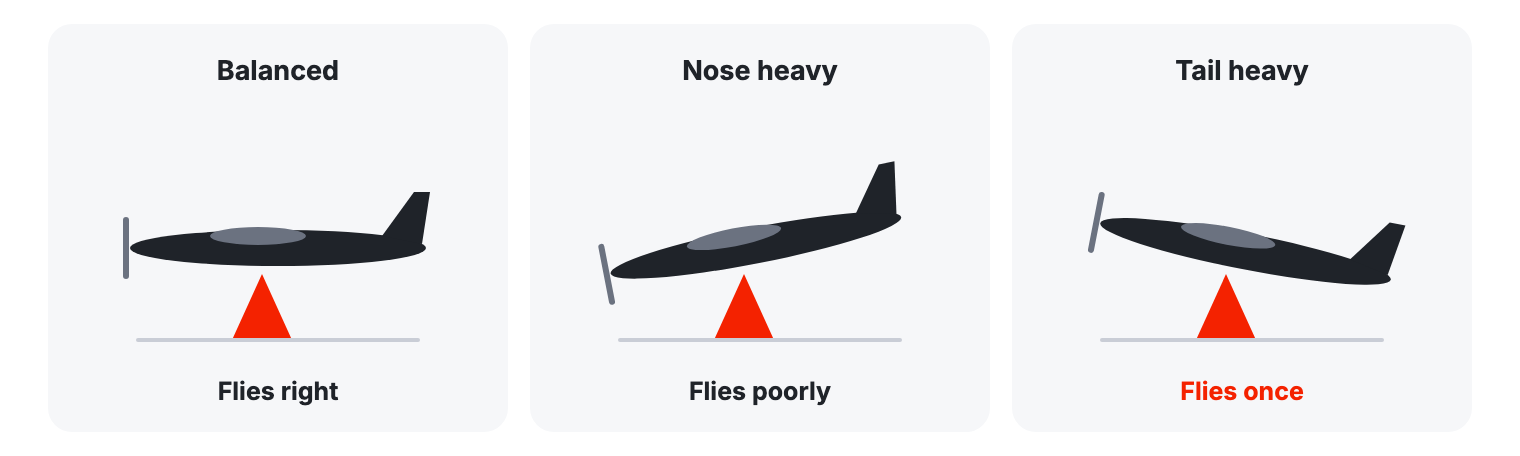
A glider is more sensitive to its balance point than anything else you will fly. Set the CG where the manual says, with everything installed. Then do a test glide: a firm, level toss into the wind over tall grass. It should float away flat. If it dives or stalls, fix the balance before you launch for real.
Check the Surfaces
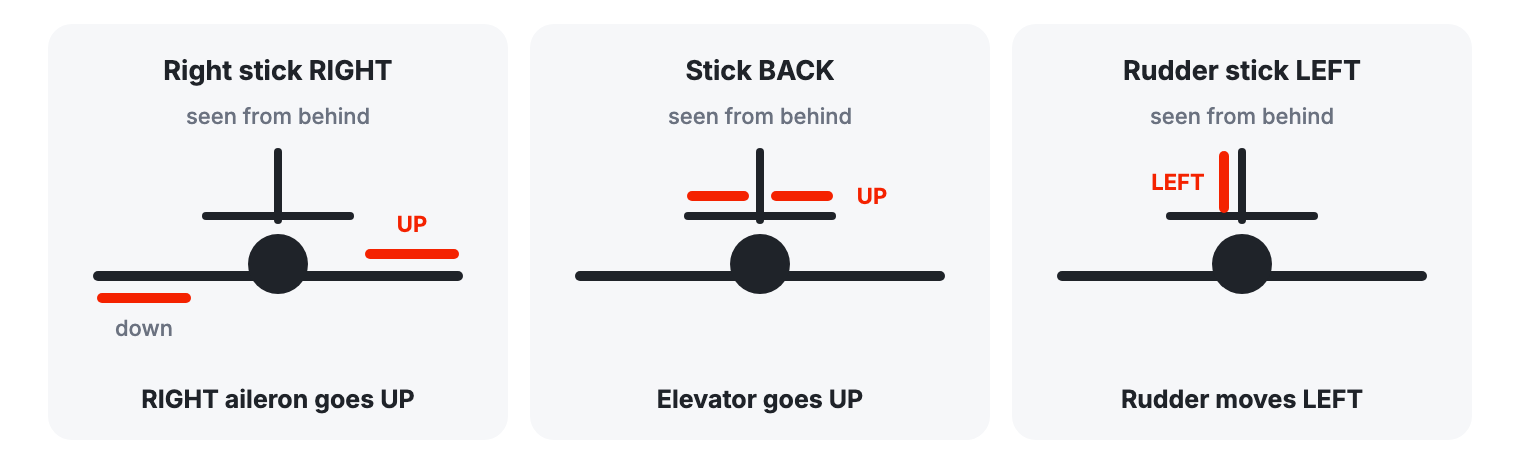
- Rudder stick left: the rudder moves LEFT.
- Stick back: the elevator goes UP.
- Right aileron stick: the RIGHT aileron goes UP.
Getting Down
Staying up is only half of it. A clean glider does not want to land. Flaps, spoilers or "crow" (flaps down, ailerons up) add drag so you can put it on a spot. Learn to use them early.

The Best Gadget in Soaring
A variometer. It is a tiny sensor that tells your radio whether the glider is climbing or sinking, and your radio turns that into a rising or falling tone. With a vario you can hear a thermal. Add one once the basics are easy.
Receiver Power
A glider that loses receiver power lands wherever it wants. Use a good pack and check it before every flight. The chemistry choices are in Powering Your Bird.
