
A Lot More Wires
A jet carries everything a sport airplane does, and then keeps going. The good news: it is the same handful of ideas, repeated.
The Basics
- Receiver: hears your transmitter.
- Servos: more of them, and stronger. Ailerons, elevators, rudders, flaps, nose wheel steering.
- Retracts and brakes: usually electric, with their own controller.
- A gyro: common on jets. It smooths the bumps and steadies the approach.
Power You Can Trust
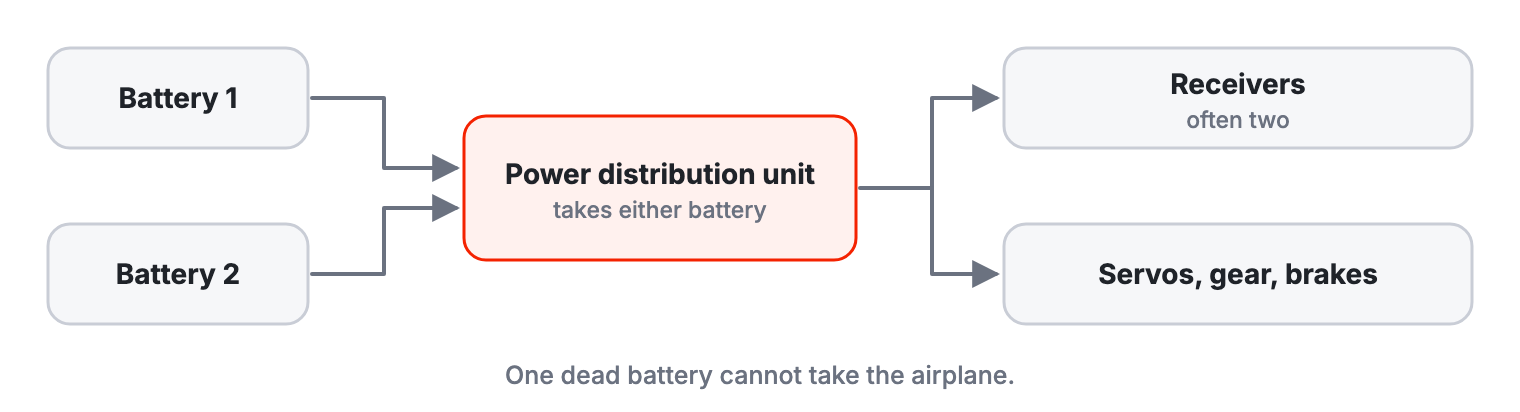
A jet that loses receiver power is a very expensive lawn dart. Larger jets carry two receiver batteries feeding a power distribution unit, so a single failure cannot take the airplane. Which chemistry to use, and whether you need a regulator, is in Powering Your Bird.
On a Turbine Jet, Add
- The ECU: the turbine's own computer. It starts the engine, watches it and shuts it down.
- A fuel pump and valves, run by the ECU.
- An air trap between the tanks and the pump, so the turbine never swallows a bubble.
- An ECU battery, separate from the receiver power.
- Telemetry: fuel used, rpm and exhaust temperature on your transmitter.
On an EDF, Add
A big speed controller with good cooling air, and heavy wiring kept as short as you can make it.
Before It Flies
- Check every control surface for direction. Then check again.
- Balance it at the manual's CG with the tanks or packs in place.
- Cycle the gear ten times on the bench.
- Secure every wire and tube. A loose lead in a jet finds trouble at speed.
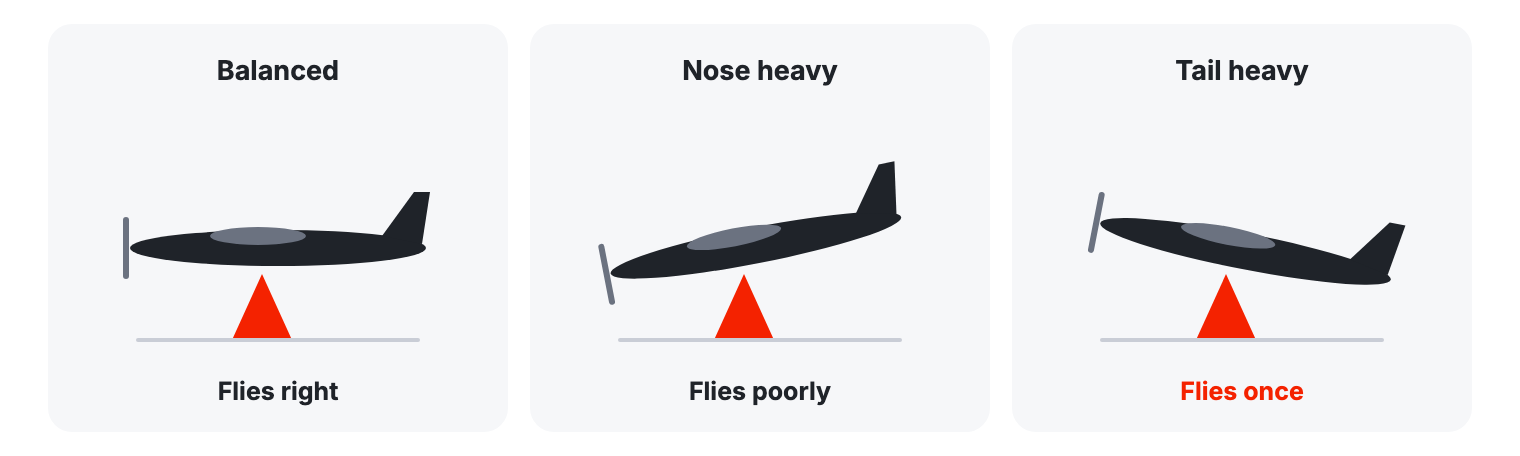
Mechanical setup comes first. Electronics cannot rescue a jet that is tail heavy.


