
Fans and Fire
Two ways to push a jet. One plugs in. One burns kerosene and sounds like the real thing, because it is the real thing.
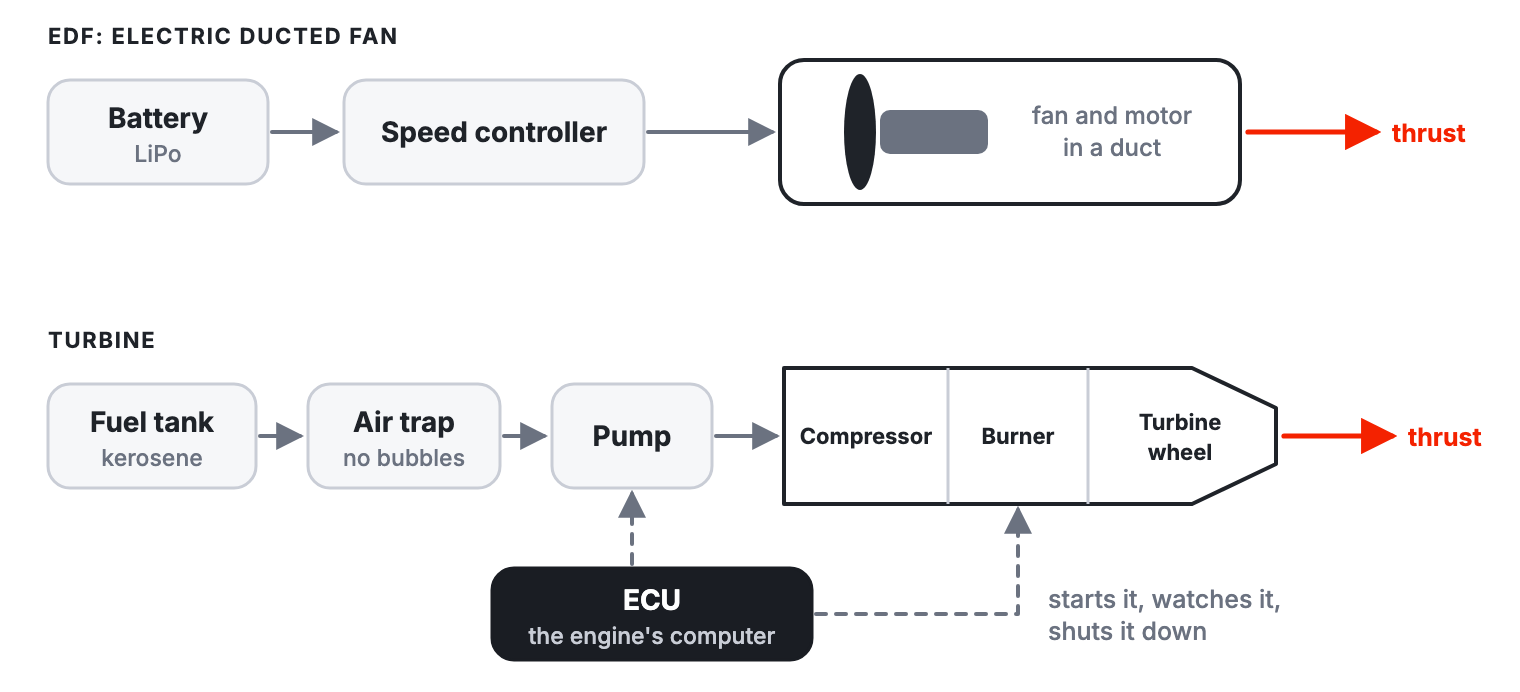
EDF: Electric Ducted Fan
A multi-blade fan inside a duct, spun by a brushless motor. Fans are named by diameter. A 70 millimeter fan typically runs on a 6S pack, and the big ones run on more cells. EDFs pull serious current, so buy good packs with real connectors and expect short flights. The reward is a jet you can fly at almost any field with no fuel, no waiver and no fuss.
Turbine
A miniature jet engine. It burns kerosene or Jet-A mixed with a little oil, it is started and managed by its own computer (the ECU), and it makes thrust the way the big ones do. It also brings:
- Spool lag. Ask for power and it arrives a moment later. You learn to fly ahead of the airplane.
- Fuel management. A fuel pump, an air trap and a lot of plumbing, all of which must be right.
- Service. Turbines go back to their maker on a schedule.
- Paperwork. A turbine waiver in the US, and a fire extinguisher at your side every time you start.
The Introduction to Turbines course further down this page covers basic turbine operation from fuel systems to start-up. It uses a helicopter turbine, but most of it applies to jets as well.
Which First?
EDF. Every time. It teaches you to fly a jet. The turbine then only has to teach you to run a turbine.
Respect the LiPo
EDF packs work hard. Never charge unattended, store at storage charge in something that will contain a fire, and retire any pack that puffs. Read Are You Safe From Your LiPos?
One More Thing
Hot days and high fields rob thrust and stretch your takeoff roll. Read Density Altitude Can Be Dangerous before you find out the hard way.


